Camera buying guideHigh-resolution mirrorless cameras for every kind of shooting

Hamp wants a camera that can do it all: macro, nature, wildlife, and street. He crops hard and wants at least 40 MP. This guide compares the cameras he's considering — plus alternatives worth knowing about — on the dimensions that decide the purchase: sensor resolution, autofocus, EVF, burst speed, video, weather sealing, size, and price.

Specs researched Sep 2026. Not affiliated with any manufacturer or retailer.

Understanding the mount systems

Systems in this guide

  • Sony E-mount — The largest mirrorless lens ecosystem. 18 mm flange distance adapts almost anything. Extensive first- and third-party lens options from Sigma, Tamron, and others.
  • Nikon Z-mount — Nikon's mirrorless system with a wide 55 mm throat diameter. Native Z lenses plus the entire F-mount legacy via the FTZ II adapter.
  • L-mount Alliance — Shared by Leica, Panasonic, and Sigma. One lens fits all three makers' bodies. 20 mm flange distance, 51.6 mm throat. Also adapts Leica M-mount glass.
  • Canon RF-mount — Canon's mirrorless mount. Growing native lineup with third-party lenses now arriving from Sigma and Tamron after Canon opened licensing.
  • Fujifilm G-mount (medium format) — Medium format (43.8×32.9 mm sensor). 30+ native GF lenses. The sensor is 1.7× the area of full frame, with a 0.79× crop factor.

Why mount matters

  • Lens investment — the mount determines which lenses you can use natively. Adapters add cost, size, and sometimes lose autofocus.
  • L-mount alliance — Leica, Panasonic, and Sigma share the L-mount, so one lens system covers two of the cameras here.
  • Adapter flexibility — shorter flange distances (Sony E, L-mount) can adapt more legacy mounts than longer ones.
6 bodies

Sony E-mount

Dec 2022Sony E
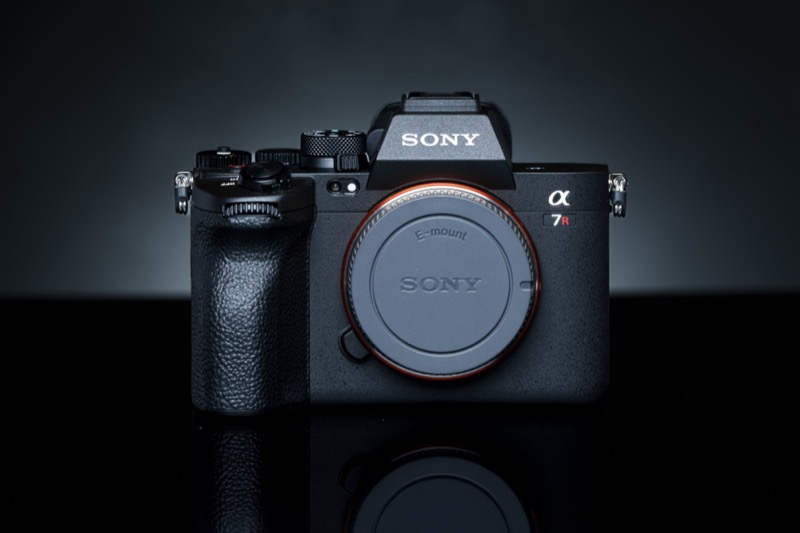
Sony A7R V front view against a black background
Henry Söderlund, CC-BY 2.0

Sony A7R V

61 MP with AI-powered autofocus

Sony's high-resolution flagship pairs a 61 MP BSI-CMOS sensor with a dedicated AI processing unit for subject recognition. The 9.44 million-dot EVF is the largest and sharpest Hamp mentioned. 8-stop IBIS, 10 fps burst, and the deepest native lens ecosystem of any mirrorless system.

Sensor61 MP BSI-CMOSIBIS8-stopUsable ISO6,400 clean / 12,800 maxAF693pt AI hybridEVF9.4M 120HzBurst10/10 fpsVideo8K24, 4K60Screen3.2" 2.1M 4-axis touchSealingSplash resistantSize723 gMountSony E

For Hamp's shooting

MacroWildlifeStreetNature / landscape

Price

$3,898 new

Used: $2,400–$2,700

Strong used market with prices around $2,400–$2,700.

Sensor Exmor R BSI-CMOS. No low-pass filter. The same resolution class as the Leica SL3 but with a different sensor design — front-illuminated vs back-illuminated distinction is moot here as both are BSI.

ISO Clean to 6400, usable to 12,800 with noise reduction. 8K readout mode uses pixel binning and has different noise characteristics.

Autofocus Dedicated AI processing unit handles subject recognition independently of the main image processor. Real-time eye AF for people and animals is best-in-class. Insect detection is unique among the cameras here.

EVF Quad-XGA OLED, 0.64-inch panel. This is the EVF Hamp specifically liked — the largest magnification and highest resolution of any camera in its price class. 120 fps refresh with no resolution reduction.

Burst 10 fps in both mechanical and electronic shutter. The buffer is enormous: 583 compressed RAW frames. No blackout-free mode. The electronic shutter maxes at 1/8000, same as mechanical.

Video 8K at 24/25p with a 1.24× crop. 4K at 60p with a 1.24× crop, or 4K 30p full-width. 10-bit 4:2:2 XAVC. Not a video-first camera but competent.

Screen Sony's hybrid design: tilts up/down in landscape and flips out to the side for vari-angle use. Best of both worlds, though the mechanism is more complex.

Sealing Magnesium alloy body with dust and moisture resistance. No formal IP rating. Sony states it is not guaranteed to be 100% dust/moisture proof.

Storage Dual combo slots accept both CFexpress Type A and SD UHS-II cards. CFexpress Type A cards are smaller and more expensive than Type B.

Battery CIPA 440 (EVF) / 530 (LCD). Adequate for a full day with a spare. USB-C charging supported.

Mount The largest mirrorless lens ecosystem. Native options from Sony, Sigma, Tamron, Voigtlander, and others. The 18 mm flange distance can adapt almost any lens mount with the right adapter.

Verdict. The resolution-per-dollar champion. 61 MP in a compact body with the deepest lens ecosystem in mirrorless. The AI autofocus is excellent for everything except the fastest wildlife action, where the non-stacked sensor's 10 fps ceiling shows against the Z8 and R5 II's 20–30 fps. If Hamp primarily crops and wants the most lens choices at every price point, this is the one.
Nikon Z-mount

Jun 2023Nikon Z
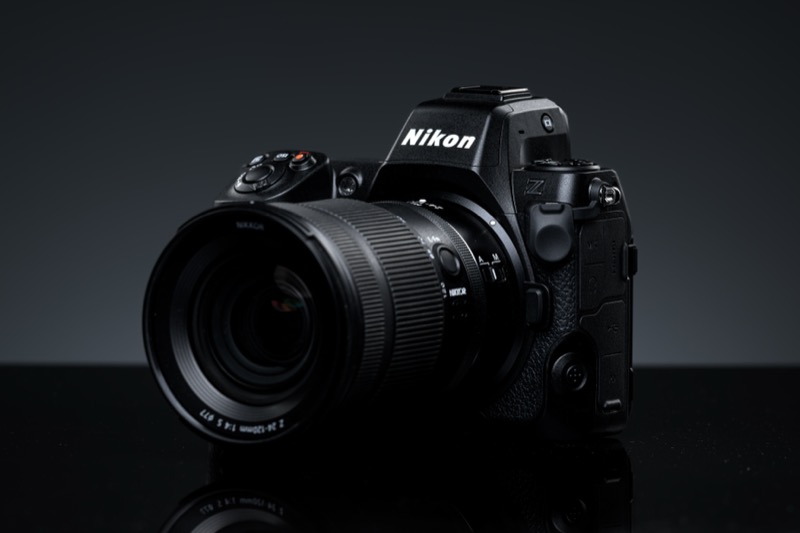
Nikon Z8 mirrorless camera with Nikkor Z lens against a black background
Henry Söderlund, CC-BY 2.0

Nikon Z8

Flagship sensor in a lighter body

The Z9's 45.7 MP stacked sensor in a smaller, cheaper body. No mechanical shutter — the stacked design reads fast enough to eliminate rolling shutter for most subjects. 20 fps with a seemingly bottomless buffer, base ISO 64 for outstanding dynamic range, and a telephoto lens lineup that's hard to beat for wildlife.

Sensor45.7 MP Stacked BSI-CMOSIBIS6-stopUsable ISO6,400 clean / 12,800 maxAF493pt AI hybridEVF3.7M 120HzBurst—/20 fpsVideo8K30, 4K120Screen3.2" 2.1M 4-axis tilt touchSealingSplash resistantSize910 gMountNikon Z

For Hamp's shooting

MacroWildlifeStreetNature / landscape

Price

$3,497 new

Used: $2,850–$3,150

$3,497 after rebate — the best price-to-performance ratio of any flagship-tier camera.

Sensor Stacked sensor with integrated memory for fast readout. No mechanical shutter — electronic only. Base ISO 64 delivers about 0.5 stops more dynamic range than ISO 100 cameras, valuable for landscape and nature.

ISO Base ISO 64 is the lowest here — excellent for dynamic range. Clean to 6400, usable to 12,800. The stacked sensor's speed comes at no ISO penalty.

Autofocus Subject detection covers people, animals (including a general "other animals" category for reptiles, deer, etc.), birds, and vehicles. Low-light AF to -7 EV is the best in the group. 3D-tracking inherited from the Z9.

EVF Quad-VGA OLED, 3000 nits. The resolution is lower than the Sony and Canon EVFs — this is the Z8's one clear weakness. Usable and bright, but noticeably less detailed.

Burst 20 fps with full AF/AE tracking. Buffer is effectively unlimited for compressed RAW — 1000+ frames at 20 fps means 50 seconds of continuous shooting. No mechanical shutter at all.

Video 8K 30p oversampled from the full sensor. 4K 120p for slow motion. Strong N-Log and HLG support. Excellent video specs.

Screen Nikon's 4-axis tilting design works in both landscape and portrait orientation — a genuine innovation. Not a full vari-angle flip-out.

Sealing Dust and moisture sealed, magnesium alloy body. Widely used in harsh conditions. Not formally freeze-rated but commonly used in cold.

Storage CFexpress Type B slot handles the fast write speeds needed for 20 fps bursts. The SD slot works as backup or overflow.

Battery CIPA 340 (EVF) is the weakest of any camera here. The EN-EL15c is small for the camera's capabilities. Budget for two or three spares on a field day. The Z9 solves this with the much larger EN-EL18d.

Mount The Z 180-600mm f/5.6-6.3 VR (~$1,700) is widely considered the best value wildlife zoom available today. The Z 100-400mm f/4.5-5.6 VR S, Z 105mm f/2.8 VR S Macro, and Z MC 50mm f/2.8 Macro round out the lineup for Hamp's use cases. The FTZ II adapter opens the entire F-mount catalog.

Verdict. The wildlife and action king at a price that undercuts everything else at this tier. 20 fps with an unlimited buffer, outstanding subject detection, and the Z 180-600mm lens make this the strongest wildlife setup here. The tradeoff: 45.7 MP is the lowest resolution in the group, giving Hamp less room to crop than the 60 MP+ options. The EVF is also a step behind Sony and Canon. If wildlife is the priority and cropping comes second, this is the pick. The Z9 is the same camera with a bigger battery and integrated grip for $2,000 more.

L-mount Alliance

Mar 2024L-mount
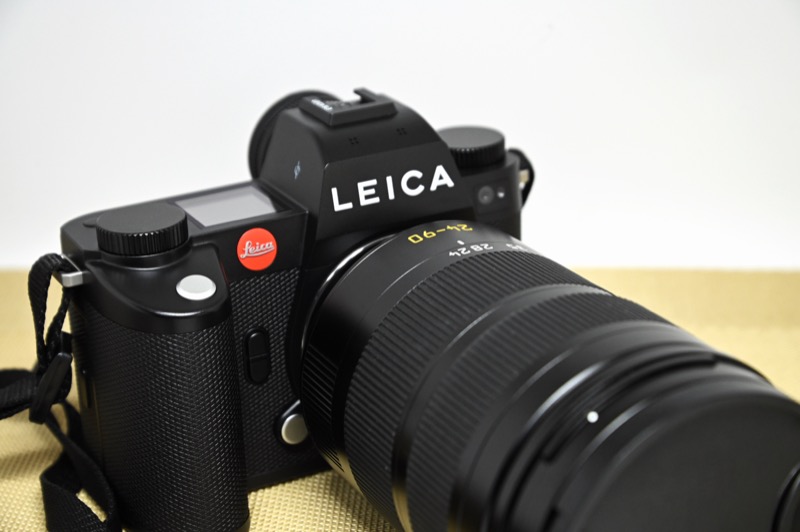
Leica SL3 full-frame mirrorless camera body
ScribblingGeek, CC-BY-SA 4.0

Leica SL3

60 MP with L-mount versatility and M-mount compatibility

Leica's mirrorless SL body with the 60 MP BSI-CMOS sensor from the M11 in a weather-sealed, L-mount body. It can natively use every L-mount lens from Leica, Panasonic, and Sigma, and adapts Leica M-mount glass with full electronic coupling via Leica's own adapter. IP54 rated.

Sensor60 MP BSI-CMOSIBIS5-stopUsable ISO6,400 clean / 12,500 maxAF315pt hybridEVF5.8M 120HzBurst5/15 fpsVideo8K30, 4K60Screen3.2" 2.3M tilt touchSealingIP54Size850 gMountL-mount

For Hamp's shooting

MacroWildlifeStreetNature / landscape

Price

$7,485 new

Used: $5,100–$6,200

The most expensive full-frame body here at $7,485 (up from $6,995 launch MSRP after tariff adjustments). Used from $5,100.

Sensor The same 60 MP triple-resolution sensor as the M11, made by the same fab. Can shoot at 60, 36, or 18 MP natively. 5-stop IBIS is the lowest rating in this group but still meaningful.

ISO Base ISO 50 is the lowest native base here. Clean to 6400, usable to 12,500. The sensor prioritizes dynamic range and resolution over extreme high-ISO performance.

Autofocus Object detection for people, animals, and vehicles. 315 AF points is the fewest in the group. Leica's AF has improved dramatically from the SL2 but remains a step behind Sony, Nikon, and Canon in tracking speed and reliability for fast-moving wildlife.

EVF 5.76M-dot OLED, 0.76× magnification, 120 Hz. Adequate but behind the Sony A7R V's 9.44M dots. The Leica viewfinder experience is tuned for color accuracy over raw resolution.

Burst 15 fps electronic (AF/AE locked to first frame), 5 fps mechanical with continuous AF. Buffer ~80 RAW frames. Not built for sustained action sequences.

Video C8K at 30p, 4K at 60p. H.265, Apple ProRes 422 HQ at 1080p. Internal recording to both card slots. No time limit.

Screen Tilting touchscreen, not vari-angle. Leica's UI is minimal and refined. 2.33M dots is one of the higher resolutions in the group.

Sealing IP54 rated — the only formally IP-rated body in this guide. Dust-protected and splash-proof from any direction. Meaningful confidence for field use.

Storage One CFexpress Type B slot and one SD UHS-II slot.

Battery CIPA 320. Real-world closer to 1,350 shots with auto-off settings. USB-C charging (min 27W).

Mount The L-mount alliance means every Sigma, Panasonic, and Leica L-mount lens works natively. The Leica M-Adapter L passes lens identification to the body for corner correction — this is the adapter Hamp wants if he has M-mount glass. Sigma's L-mount lineup is excellent and affordable.

Verdict. The camera for someone who values the Leica ecosystem and wants to use M-mount lenses on a modern mirrorless body. 60 MP and IP54 sealing are strong, but the AF system and burst rate lag behind Sony, Nikon, and Canon at roughly double their price. If Hamp already owns or plans to buy Leica glass, the SL3 makes sense; if he's starting fresh, the Panasonic S1R II shares the L-mount at half the price.

Fujifilm G-mount (medium format)

Jun 2024Fuji GFX
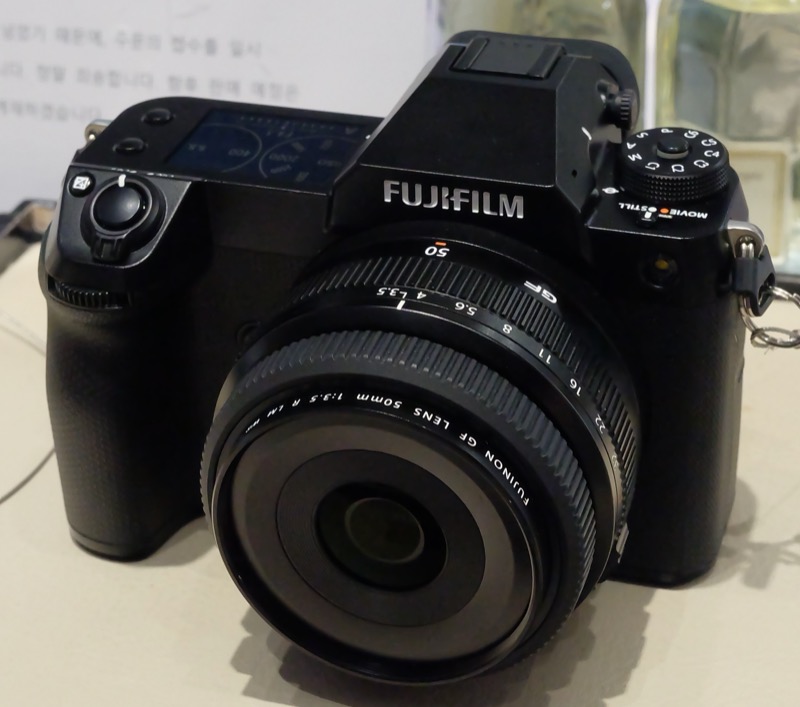
Fujifilm GFX 100S II medium format mirrorless camera with lens, front view
Hirume Ochi, CC0 1.0

Fujifilm GFX 100S II

102 MP medium format in a manageable body

The lightest 102 MP camera ever made. A 43.8×32.9 mm medium format sensor — 1.7× the area of full frame — in a body that weighs only 883 g. The resolution is extraordinary: crop to 50% of the frame and you still have 25 MP. The tradeoff is autofocus speed, burst rate, and telephoto lens reach.

Sensor102 MP CMOSIBIS8-stopUsable ISO6,400 clean / 12,800 maxAF425pt hybridEVF5.8M 85HzBurst7/7 fpsVideo4K30Screen3.2" 2.4M tilt touchSealingSplash resistantSize883 gMountFujifilm G

For Hamp's shooting

MacroWildlifeStreetNature / landscape

Price

$4,999 new

Used: $4,000–$4,500

Very competitive for 102 MP medium format. Used market is thin since the camera is recent.

Sensor 102 MP on a sensor 1.7× larger than full frame. Whether the sensor is BSI or FSI is disputed — Fujifilm's language is ambiguous. 8-stop IBIS with select GF lenses. The 0.79× crop factor means a 50 mm lens gives a 40 mm full-frame field of view.

ISO ISO 80 base. The larger sensor area gives roughly a 0.5–0.7 stop noise advantage over full frame at equivalent ISOs. Clean to 6400, usable to 12,800.

Autofocus Subject detection for face/eye, animals, and birds. Not as advanced as the GFX 100 II's deep-learning system — fewer detection categories and less reliable tracking of fast-erratic subjects.

EVF 5.76M-dot OLED, 0.84× magnification, 85 fps in boost mode (50 fps normal). The refresh rate is the lowest here — noticeably behind the 120 Hz+ full-frame competitors. Built-in, non-detachable.

Burst 7 fps is the slowest in the group. Buffer is limited (~60 RAW frames). Not built for sustained action. The GFX 100 II does 8 fps for $2,500 more.

Video 4K at 30p only — no 4K 60p, no 8K. The most limited video specs in the group. If video matters, look elsewhere.

Screen 3-way tilting touchscreen. Also has a 1.8-inch top-plate sub-LCD showing settings — a feature no other camera here has.

Sealing 60 sealing points, dust and moisture resistant, rated to -10°C. Fewer seals than the GFX 100 II but still professional-grade.

Storage Dual SD UHS-II slots. No CFexpress — adequate for 7 fps but won't keep up with the fastest burst rates if they ever came to this platform.

Battery CIPA 540 — the best battery life in the group. Same battery as the GFX 100 II and the X-T5. USB-C charging.

Mount About 30+ native GF lenses. The longest native option is the GF 500mm f/5.6 (~396 mm full-frame equivalent). No true 1:1 macro lens — the GF 120mm f/4 Macro tops out at 0.5× (1:2). The ecosystem is complete for landscape and portraiture but thin for wildlife super-telephoto.

Verdict. The resolution king: 102 MP on a medium format sensor delivers detail and tonal depth that no full-frame camera here can match. Crop to the equivalent of a full-frame field of view and you still have ~61 MP — the same as the uncropped Sony A7R V. For landscape, macro (with the caveat of no 1:1 native lens), and deliberate work, it's extraordinary. For wildlife (7 fps, no long telephotos) and street (large body, slower AF), it falls behind. Worth considering if Hamp's shooting leans more contemplative than reactive.

Canon RF-mount

Aug 2024Canon RF
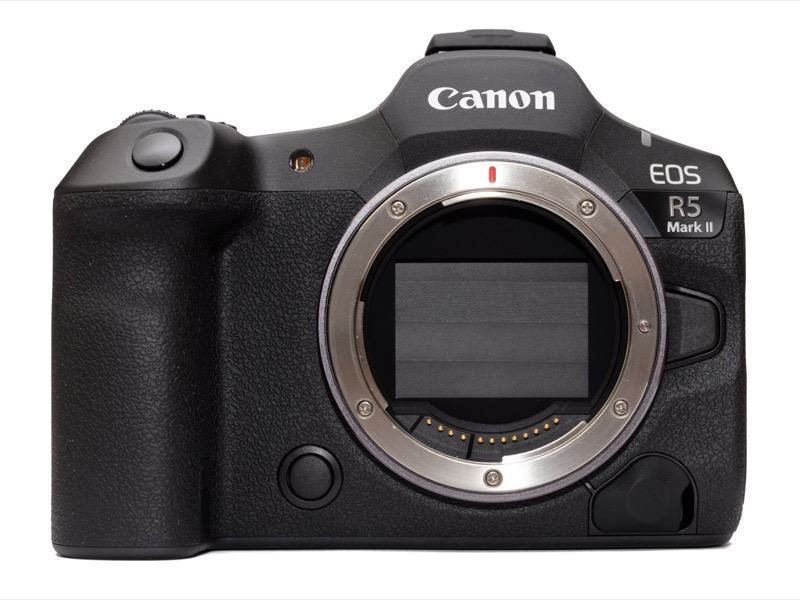
Canon EOS R5 Mark II front view without body cap, showing the Canon RF lens mount
D. Benjamin Miller, CC0 1.0

Canon EOS R5 Mark II

45 MP stacked sensor with 30 fps and 8.5-stop IBIS

Canon's answer to the Z8 and A1: a 45 MP stacked BSI-CMOS sensor with 30 fps electronic burst, 8.5-stop IBIS (the highest here), Eye Control AF, and a vari-angle screen that's ideal for macro. The lightest body in the group at 746 g.

Sensor45 MP Stacked BSI-CMOSIBIS8.5-stopUsable ISO6,400 clean / 12,800 maxAF1053pt Dual PixelEVF5.8M 120HzBurst12/30 fpsVideo8K60, 4K120Screen3.2" 2.1M vari-angle touchSealingSplash resistantSize746 gMountCanon RF

For Hamp's shooting

MacroWildlifeStreetNature / landscape

Price

$3,799 new

Used: $3,200–$3,500

$3,799 after discount, down from $4,299 MSRP. Used/refurbished around $3,400.

Sensor Stacked sensor with integrated memory for fast readout. 8.5-stop IBIS at center (7.5 at edges) with compatible Canon IS lenses is the highest rating of any camera here — a genuine advantage for handheld macro and low-light work.

ISO Clean to 6400, usable to 12,800–16,000 with modern NR. Performance is essentially identical to the original R5.

Autofocus 1,053 AF points with 100% frame coverage — the most AF points and widest coverage here. Subject detection includes horses (unique) and uses deep learning for action prediction. Eye Control AF selects the focus point by tracking where your eye looks in the viewfinder.

EVF 5.76M-dot OLED, 0.76× magnification, 120 Hz. Includes Eye Control AF hardware. The magnification is the lowest here, meaning the viewfinder image appears slightly smaller.

Burst 30 fps electronic with full AF/AE — the fastest in the group. 12 fps mechanical. Pre-capture records 0.5 seconds (15 frames) before you press the shutter. Buffer of ~230 compressed RAW at 30 fps.

Video 8K at 60p internal (the only camera here that does 8K 60p). 4K 120p. Full HD 240p. Canon Log 2. Outstanding video specs.

Screen Fully articulating vari-angle flip-out touchscreen — the best screen design for macro work. Flip it out to shoot at ground level, overhead, or from any angle. Also ideal for video and selfie monitoring.

Sealing Dust and water-resistant construction, comparable to other Canon professional bodies. No formal IP rating.

Storage CFexpress Type B handles the fast write speeds needed for 30 fps bursts. Type B cards are more widely available and cheaper than Type A.

Battery CIPA 340 (EVF) / 630 (LCD). Battery life with the EVF is poor — same as the Nikon Z8. The LP-E6P is backward-compatible with LP-E6NH.

Mount The RF 100mm f/2.8L Macro IS USM (1.4× magnification) is widely considered one of the best macro lenses ever made. The RF 100-500mm f/4.5-7.1L IS USM is the premier wildlife zoom. Third-party RF lenses from Sigma and Tamron are now arriving. The entire Canon EF lens catalog works via adapter.

Verdict. The best all-rounder if you weight macro, wildlife, and versatility equally. 8.5-stop IBIS is a genuine advantage for handheld macro; 30 fps with pre-capture catches decisive wildlife moments; the vari-angle screen makes ground-level and overhead shooting easy. The tradeoff vs the A7R V and SL3 is resolution: 45 MP gives about 25% fewer pixels to crop. The Canon RF lens ecosystem is excellent but has been more expensive than Sony E-mount alternatives — third-party options are now closing that gap.

Mar 2025L-mount
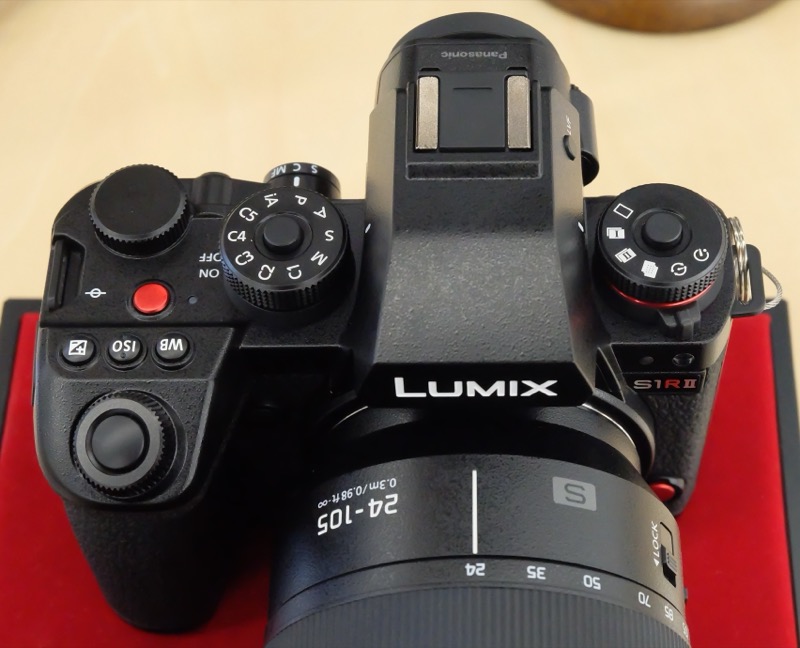
Panasonic Lumix S1R II mirrorless camera with lens, front view
Hirume Ochi, CC0 1.0

Panasonic Lumix S1R II

44 MP with 40 fps and L-mount at an unbeatable price

Panasonic's answer to the resolution question: 44.3 MP with phase-detect AF (finally), 40 fps electronic burst, 8K video, and 8-stop IBIS — all for $3,300, or about $3,000 after rebate. It shares the L-mount with the Leica SL3 at less than half the price. 25% lighter than the original S1R.

Sensor44.3 MP BSI-CMOSIBIS8-stopUsable ISO6,400 clean / 12,800 maxAF779pt hybridEVF5.8M 120HzBurst10/40 fpsVideo8K30, 4K120Screen3.0" 1.8M vari-angle touchSealingSplash resistantSize795 gMountL-mount

For Hamp's shooting

MacroWildlifeStreetNature / landscape

Price

$3,000 new

Used: $2,479–$2,639

$3,000 after $300 rebate (MSRP $3,300). Already available used around $2,500 — extraordinary value.

Sensor Newly developed 44.3 MP BSI-CMOS. Dual native ISO with a switch point at ISO 400 — a Panasonic innovation that keeps noise low across the range. 177 MP handheld high-resolution mode.

ISO Base ISO 80 with dual native ISO switching at 400. Clean to 6400, usable to 12,800. The dual native ISO circuit is particularly good at keeping shadow noise low.

Autofocus This is Panasonic's first high-res body with phase-detect AF — the original S1R used contrast-detect only, which was notoriously unreliable for moving subjects. 779 PDAF points is a massive upgrade. Subject detection covers people, animals, and vehicles.

EVF 5.76M-dot OLED, 120 Hz selectable. Adequate but not class-leading. Matches the Leica SL3 EVF spec.

Burst 40 fps electronic is the fastest in the group — even faster than the Canon R5 II's 30 fps. 10 fps mechanical. Buffer is modest at ~70 RAW frames. Pre-burst capture records up to 1.5 seconds before the shutter press.

Video 8K at 30p, 6.4K open-gate, 5.8K ProRes RAW HQ internal (to CFexpress). 4K at 120p. Internal ProRes 422 recording. Outstanding video specs — arguably the best video camera in the group for the price.

Screen Fully articulating vari-angle touchscreen. The smallest screen in the group at 3.0 inches and 1.84M dots, but the vari-angle design is ideal for macro.

Sealing Dust, splash, and freeze resistant. Magnesium alloy body with seals. Operating temperature rated to -10°C. Internal cooling fan.

Storage CFexpress Type B handles 40 fps bursts and ProRes RAW recording. Relay, backup, and simultaneous recording supported.

Battery CIPA 350 (EVF) / 300 — the weakest battery life in the group. Budget for two or three spares.

Mount Shares the L-mount with the Leica SL3. Every Sigma, Panasonic, and Leica L-mount lens works natively. Sigma's L-mount Art primes and zooms are particularly good value. The S 100mm f/2.8 Macro is a strong native macro option.

Verdict. The value bomb. 44 MP, 40 fps, 8K video, phase-detect AF, and 8-stop IBIS for $3,000 is almost absurd. It shares the L-mount with the Leica SL3 at less than half the price, so Hamp gets access to the same Sigma, Panasonic, and Leica lenses either way. The tradeoffs: battery life is poor, the screen is the smallest here, and 44 MP gives less crop room than the 60 MP options. But at this price, you could buy the S1R II and a Sigma 100-400mm f/5-6.3 for less than a Sony A7R V body alone.

If you want…

  • the most megapixels for heavy cropping on a budget → Sony A7R V — 61 MP, the deepest lens ecosystem, and used prices around $2,500 make this the resolution-per-dollar champion in full frame.
  • the best all-rounder for every kind of shooting → Nikon Z8, Canon EOS R5 Mark II — the Z8 has 20 fps with a huge buffer and excellent wildlife AF at the lowest price; the R5 II adds 30 fps and the best IBIS in the group.
  • wildlife and birds above all else → Nikon Z8, Canon EOS R5 Mark II — stacked sensors for fast readout, high burst rates, advanced subject detection, and deep super-telephoto lens ecosystems.
  • macro photography as a priority → Canon EOS R5 Mark II, Sony A7R V — the R5 II has 8.5-stop IBIS and a vari-angle screen ideal for low-angle work; the A7R V pairs 61 MP with Sony's excellent 90mm Macro.
  • street shooting — small, light, discreet → Sony A7R V, Panasonic Lumix S1R II — the A7R V is compact and has the largest third-party lens selection; the S1R II is the lightest body here with great ergonomics.
  • L-mount and Leica M-mount lens compatibility → Leica SL3, Panasonic Lumix S1R II — both use the L-mount and can adapt M-mount glass. The SL3 has more resolution; the S1R II is half the price.
  • medium format resolution and tonal depth → Fujifilm GFX 100S II — 102 MP on a sensor 1.7× the size of full frame. Not ideal for wildlife or street, but nothing matches it for detail in landscape and macro.
  • the best value — most camera for the money → Panasonic Lumix S1R II, Nikon Z8 — the S1R II at $3,000 (after rebate) with 40 fps and 8K is extraordinary value; the Z8 at $3,500 delivers flagship performance.

Method and sources

Specs come from manufacturer product pages, press releases and manuals, cross-checked against DPReview, PetaPixel, and other review sites. "Usable ISO" is a reviewer-consensus judgment, not a spec. Prices are current MSRPs and observed used prices from B&H, KEH, Adorama, and MPB.