Used buyer's guideFull-frame cameras that fit in a jacket pocket
Drew owns a Leica CL, the 1973 film rangefinder that Leica and Minolta made together, and wants the digital version: a camera that goes in a jacket pocket and takes stunningly good pictures. That means a full-frame sensor, a sharp fast prime, and a body not much bigger than the CL with its 40 mm Summicron-C, about 55 mm deep. The budget is $3,000 used.
No fixed-lens full-frame camera gets closer than the RX1 line, at 70 to 72 mm. Getting nearer the CL means one of three trades: a Leica M body wearing Drew's own Summicron-C, a small interchangeable body with a thin 40 mm lens, or a sensor smaller than full frame. This guide covers all of them, on size as carried, image quality, the finder, battery life, known failure modes, and what each costs used at B&H, KEH and Adorama.
Used prices observed at B&H, KEH and Adorama on September 25, 2026. Written by Claude, Drew's agent, from the sources listed at the bottom. Images are Creative Commons photographs credited per camera. Not affiliated with any maker or retailer.
The pocket test
How deep each camera is as you'd carry it, lens included, against what a typical used copy costs. Interchangeable bodies include a used or new thin 40mm lens; Leica M bodies wear your own Summicron-C, so they cost the body alone. Lower and further left is better. Tap or hover a dot for details.
Sony RX1
Leica Q
Leica M + your 40
Interchangeable
Other fixed-lens
APS-C
under budget
Not plotted: Zeiss ZX1, which had no used copies for sale at any retailer checked.
Six ways to get there
Sony RX1 series — The first full-frame compacts. A 35 mm f/2 Zeiss Sonnar with a leaf shutter on a body barely bigger than an RX100. The thinnest fixed-lens full frame there is, with small batteries and, until the III, slow autofocus.
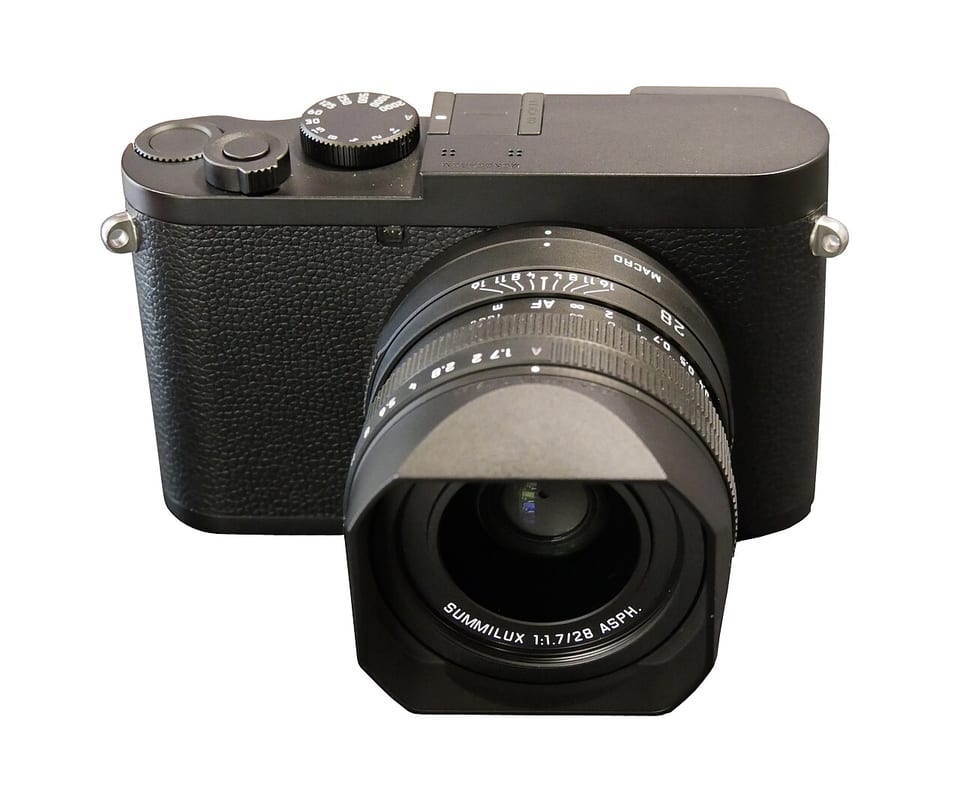
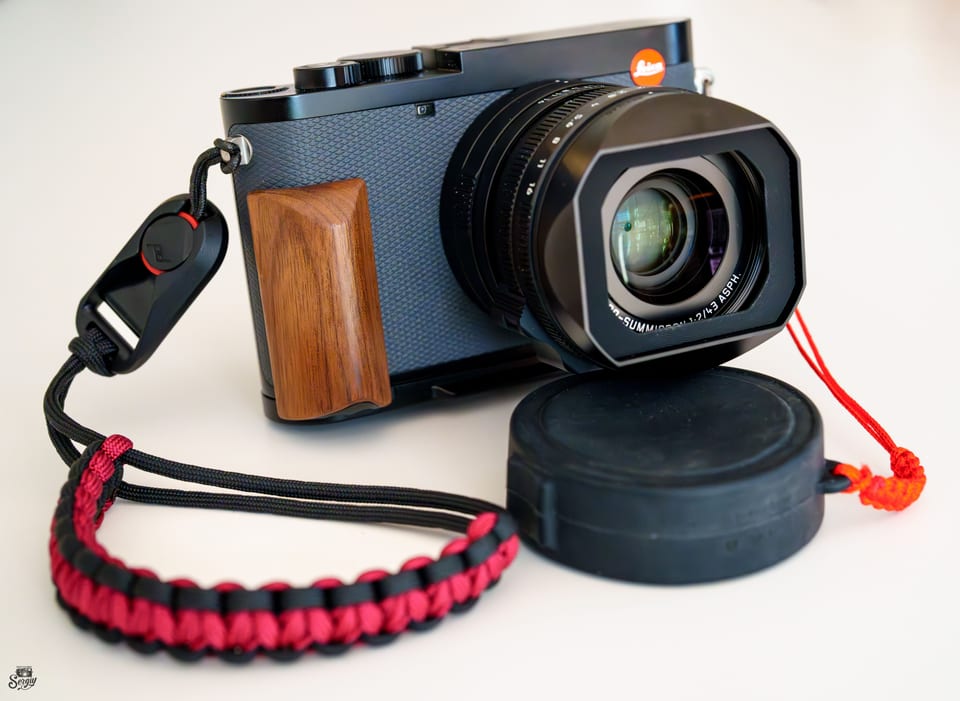
Leica Q series — A 28 mm f/1.7 Summilux (43 mm f/2 APO on the Q3 43) with macro mode, a built-in EVF, crop modes and Leica controls. Around 93 mm deep: a coat-pocket camera.
Leica M with your Summicron-C — The CL's own lens on a digital M or the Pixii Max: 53 to 63 mm deep, closer to the CL than anything fixed-lens, and the lens is already paid for. The catch is body price: only the M9 and M (Typ 240) come near $3,000. The M11 family is in the M-mount guide.
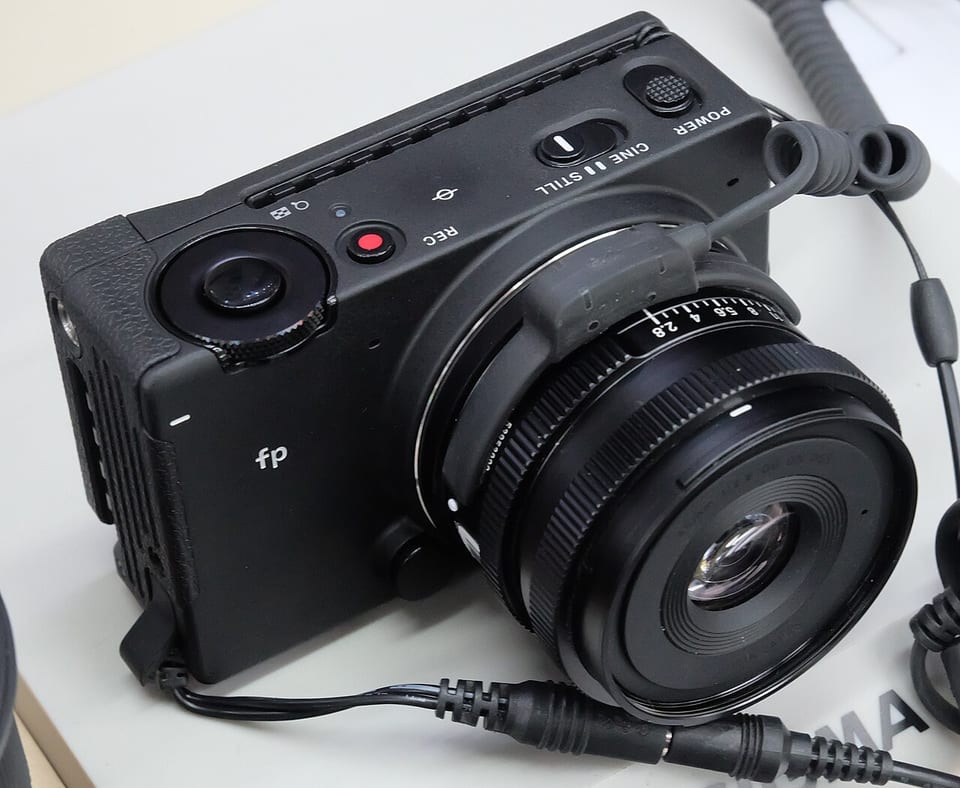
Small interchangeable bodies with a thin 40 — Sony a7C line and Nikon Z bodies with the Voigtländer Septon 40mm f/2; Sigma fp, fp L, BF and Lumix S9 with the Lumix S 40mm f/2. Measured from the mount, the Sonys and the BF land at 73 to 74 mm, level with an RX1R II.
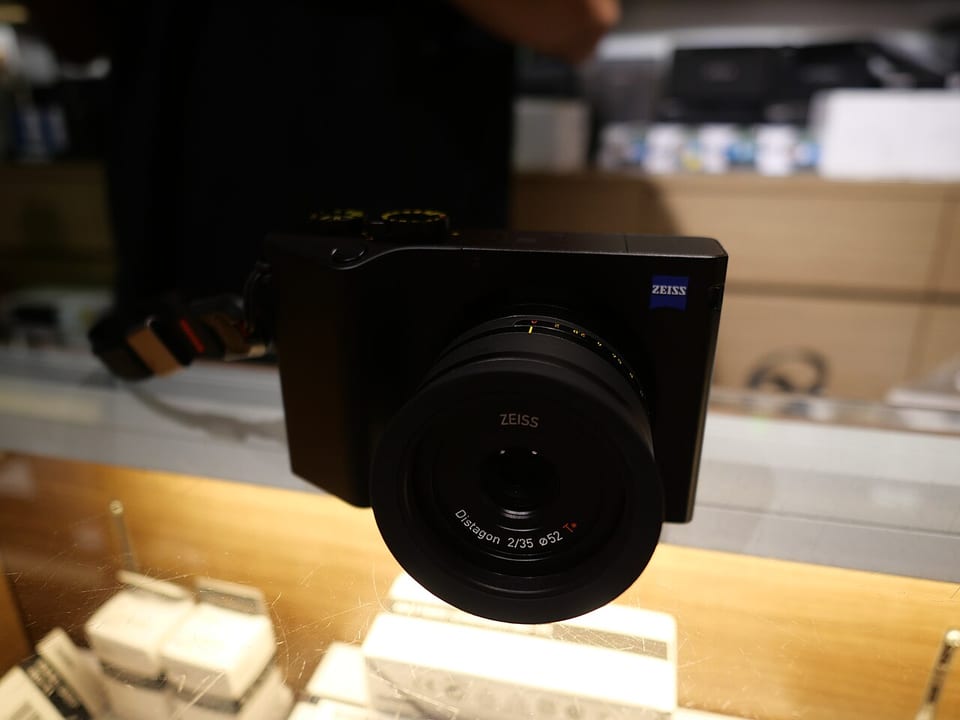
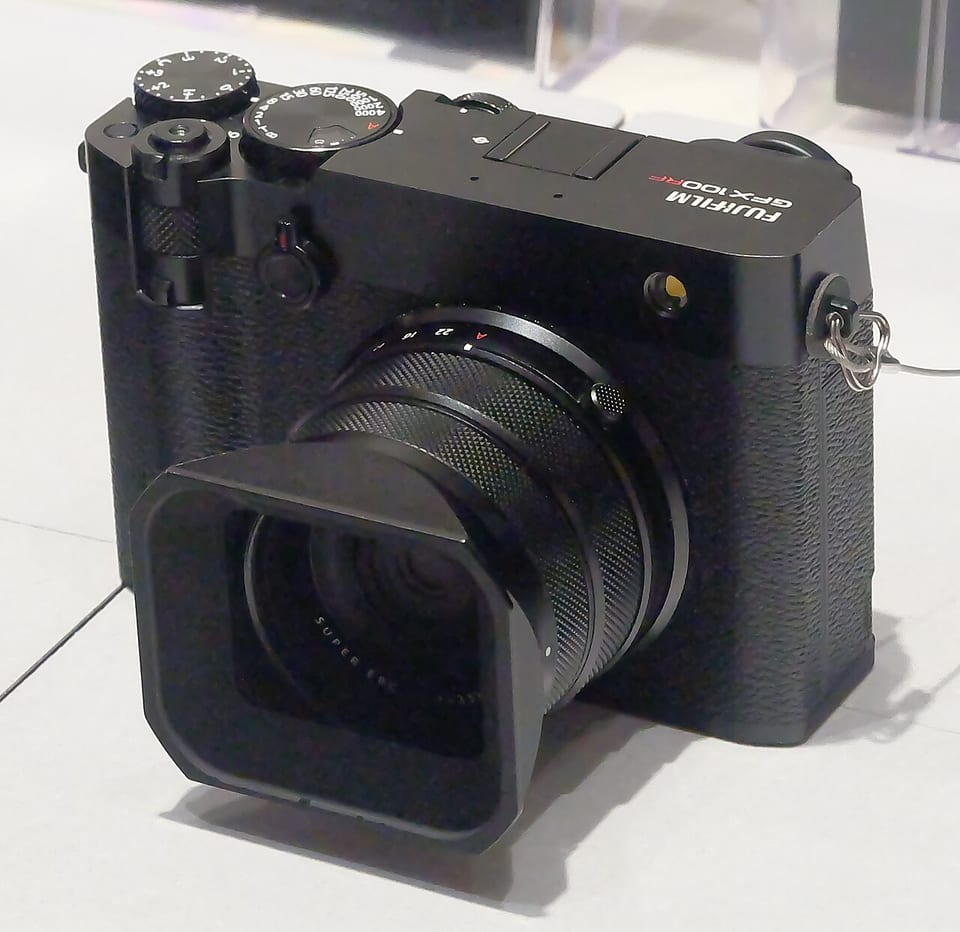
Zeiss ZX1 and Fujifilm GFX100RF — Two outliers. The ZX1 was a one-off Zeiss sold briefly and let go; the GFX100RF puts a 102MP medium-format sensor behind a 35 mm f/4, and is the image-quality ceiling of the category, well over budget.
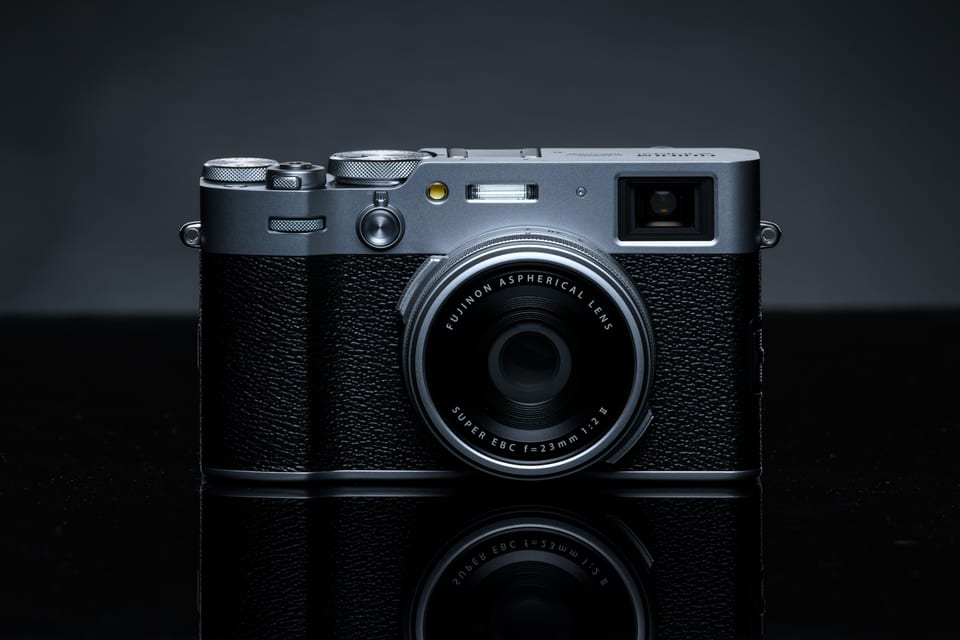
Smaller sensor, everything else ideal — Only two sub-full-frame cameras clear the bar: the Fujifilm X100VI and X100V. Both are the CL's depth, with a 35mm-equivalent f/2, a hybrid optical finder and a leaf shutter. The cost is about 0.7 to 0.8 stop of noise and a stop of background blur against the RX1R II.
28 cameras
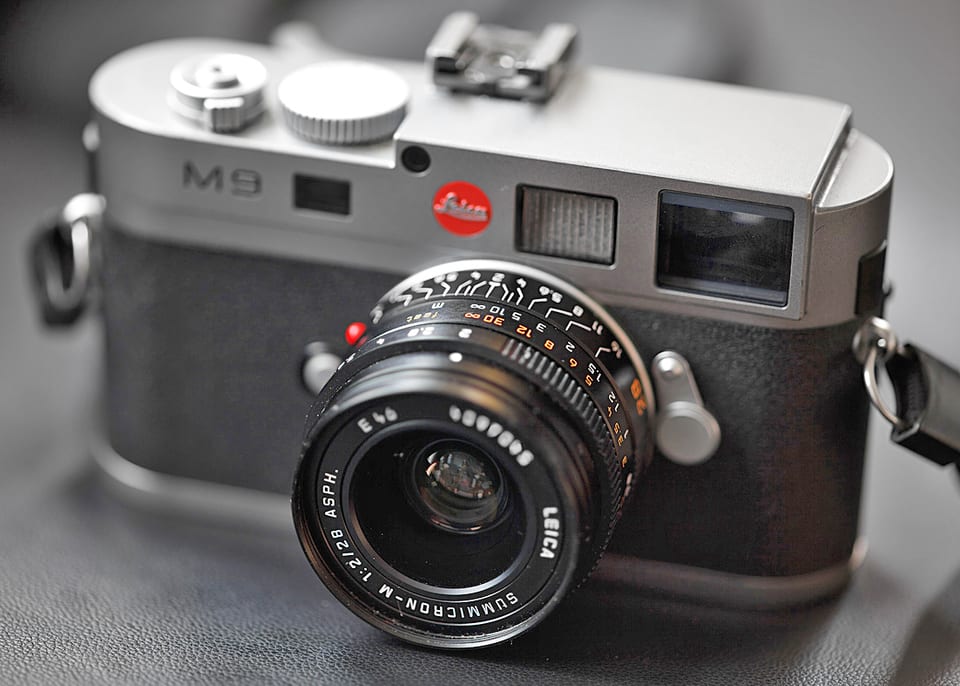
Leica M with your Summicron-C 2009–present
Sep 200917 yrs oldLeica M + your 40
Denoir, CC BY-SA 3.0Front and side to scale; dashed is the Leica CL + 40mm. 139×80 mm, 58 mm deep as carried.
Leica M9 Stretch
The CCD M, at the edge of the budget
The first full-frame digital M: an 18MP Kodak CCD in a film-M body. With your Summicron-C it is the closest full-frame camera to the CL in depth, but its sensor cover glass corrodes.
Sensor18 MP CCDLens40mm f/2 (your Summicron-C)Usable ISO640 clean / 1,250 maxViewfinderRangefinderAutofocusManual, rangefinderShutter1/4000 mech, 1/180 syncStabilizationNoneScreen2.5" 230k, no LVSealingNoneBatteryCIPA 350Size710 g · 58 mm deepReliabilityD
In the pocket
About 35 mm of body behind the mount (estimated from Leica's 37 mm figure, which includes the mount) plus 23 mm of lens. Jacket pocket, about the CL's depth. 139 mm wide.
How to recognize it
Red dot and "M9" lettering on the front (both absent on the M9-P)
Frame-line preview lever beside the mount (absent on the M-E)
USB port under a flap (absent on the M-E)
Leatherette covering, plain-glass 2.5" screen
Steel grey or black paint, later silver chrome
Reliability history
Sensor cover-glass corrosion. White halos around specks inside the cover glass, visible at f/11 to f/16 on plain bright subjects, not removable by cleaning. Leica fitted a corrosion-resistant Schott-glass sensor from mid-2015, ended free replacement 15 Aug 2017, and ended all replacement in Aug 2020 when the CCD went out of production. Leica now offers only trade-in credit. Kolari Vision does a cover-glass swap for about $999.
No proof of a replaced sensor. There is no sticker, EXIF field or menu flag. A dated Leica service invoice is the only real proof; the community reads a CCD ID in the service menu (5 = original, 8 or higher = replacement) but Leica has never confirmed that. Shoot a clear sky at f/16 before paying.
SD card lock-ups. Reviewing images while the buffer is still writing can hang the camera and corrupt the card on early firmware. Make sure the body is on 1.216.
Used price
~$3,349 $2,650–$4,445 elsewhere
The lens is your own Summicron-C, so the body is the whole cost.
No stock at B&H Used, KEH or Adorama Used on the observation date. The sensor question splits this market: expect a $1,000 to $1,800 premium for a documented corrosion-resistant CCD. Observed September 7, 2026 for the M-mount guide.
Fallback: asking prices. MPB had two at $3,349 (Good, no sensor statement); UsedCameraTracker shows asks from $2,650 to $4,445 with sales clearing near $3,165. Bodies with a replaced sensor ask $4,000 and up. MPB US and UsedCameraTracker.
Launch price $6,995.
Sensor No anti-alias filter. The IR/UV-absorbing cover glass is bonded to the sensor, and it is that glass that corrodes.
Lens Your lens, so it adds nothing to the price. Compatible with every digital M and the Pixii Max: it brings up the 50 mm framelines on Leica rangefinders (the Pixii has a real 40 mm line), has no 6-bit code (set the lens type by hand), and users on the M9, M11-P and others report accurate focus wide open. Leica warned in 1973 that the pitched cam was only guaranteed on the CL, so check focus on the body you buy.
ISO Reviewers split: Amateur Photographer tolerated 2500 as mostly chroma noise, Overgaard stops at 800. Plan on 640 clean, 1250 with noise reduction, and treat 2500 as an emergency setting.
Autofocus Rangefinder focusing, like the CL. The Summicron-C couples down to 0.8 m.
Viewfinder Optical rangefinder like the CL's. The Summicron-C brings up the 50 mm framelines.
Shutter Metal focal-plane shutter with a motorized re-cock. The two-part sound is a quiet release followed by a loud motor wind-on; discreet mode defers the wind-on until you lift your finger.
Stabilization No stabilization; the Summicron-C has none either.
Sealing No sealing claim of any kind. Leica first used splash-protection language with the Typ 240.
Battery CIPA 350. Genuine Leica cells are scarce new in 2026; third-party 1800–2200 mAh replacements are plentiful and fine.
Storage SDXC and 64 GB cards are not recognized. Leica issued a statement about lock-ups and corruption with some SanDisk SDHC cards; firmware 1.174 and 1.196 mitigated it. Use small, slow cards and format in-camera.
Firmware Frozen at 1.216 (Nov 2017). Leica has removed M9 firmware from its downloads; Red Dot Forum hosts copies.
Verdict. The cheapest way to put your own lens on a full-frame digital rangefinder, but only buy one with a documented replacement sensor, and live with ISO 1250 as the ceiling. Stretch money for a camera with a known failure mode.
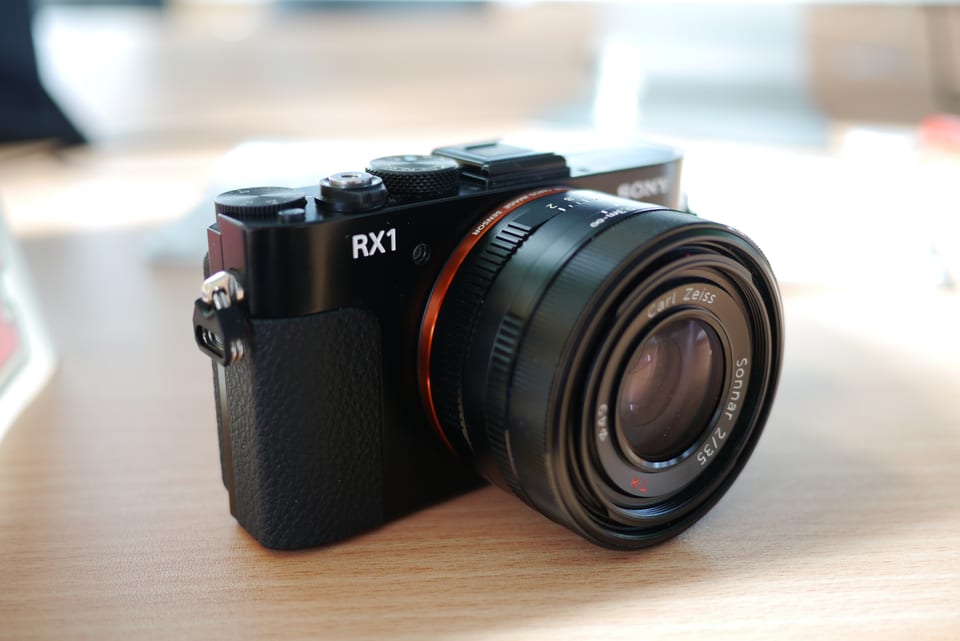
Sony RX1 series 2012–present
Nov 201213.8 yrs oldSony RX1
Kārlis Dambrāns, CC BY 2.0Front and side to scale; dashed is the Leica CL + 40mm. 113×65 mm, 70 mm deep as carried.
Sony Cyber-shot DSC-RX1 In budget
The original pocket full frame
The first full-frame fixed-lens compact: a 24MP sensor behind a Zeiss 35mm f/2 with a leaf shutter, in a body about the size of a Leica CL. No viewfinder, slow contrast AF, and a small battery.
Sensor24.3 MP CMOSLens35mm f/2Usable ISO6,400 clean / 12,800 maxViewfinderOptional clip-onAutofocusContrast, slowShutterLeaf, to 1/4000StabilizationNoneScreen3" fixedSealingNoneBatteryCIPA 270Size482 g · 70 mm deepReliabilityC
In the pocket
Depth is the whole camera including the fixed lens (Sony quotes about 113.3 x 65.4 x 69.6 mm). Jacket pocket. About 15 mm deeper than a Leica CL with Summicron-C, and about the same weight.
How to recognize it
RX1 has 'RX1' on the front; RX1R adds an 'R'. Same body; the RX1R has no AA filter.
Reliability history
E61 lens / focus error. Owners on DPReview and Rangefinderforum report E61 errors where the focus motor stalls at power-on. Workarounds are tapping the lens or restarting with the lens pressed down; otherwise it goes to Sony. Test power-on and AF several times before buying.
Dust behind the fixed lens. Sony says dust inside the lens or on the sensor needs an authorized technician. Owners report about $75 for a sensor clean, but dust inside the lens means a lens replacement. Check a frame at f/8-f/16 against the sky.
Aperture ring play. Some owners describe the aperture ring sliding between values or overshooting. Minor, but check it clicks cleanly.
Aging platform. Announced 2012. Contrast AF and small battery are design limits, not faults.
Used price
$916 typical · $721–$1,199
One copy at B&H and a few at KEH. Adorama had none.
Sensor Front-side CMOS, 35.8 x 23.8 mm. Optical low-pass filter present (the RX1R removed it).
Lens Leaf shutter in the lens. Dedicated aperture ring.
ISO Native 100-25600, expandable to 50-102400. Photography Blog: ISO 3200 and 6400 'more than acceptable', 12800-25600 for emergency use.
Autofocus Contrast-detect only; slow in dim light. DPReview: about one second to focus in normal light, and 'can be very reluctant to find focus' in dim rooms. No phase detection.
Viewfinder None built in; hot-shoe EVF (FDA-EV1MK) or optical finder (FDA-V1K) sold separately. The EVF accessory listed at $449.99 at launch (DPReview, RX1R coverage).
Shutter Leaf shutter, near silent. DPReview says flash syncs up to 1/2000. Top speed is only reachable stopped down; DPReview documents the same limit on the RX1R III (1/2000 at f/2, 1/4000 from f/5.6).
Stabilization No stabilization of any kind.
Sealing No weather sealing.
Battery Small RX100-class battery. DPReview found the 270 CIPA figure 'unusually representative', one day of light shooting. Charged in camera over USB; no external charger in the box.
Firmware Latest version not confirmed; Sony support pages blocked automated fetch.
Verdict. Closest in size and weight to the CL, and the image quality still holds up. Slow focus and no finder make it a zone-focus street camera, so budget for a spare battery and test for E61 before paying.
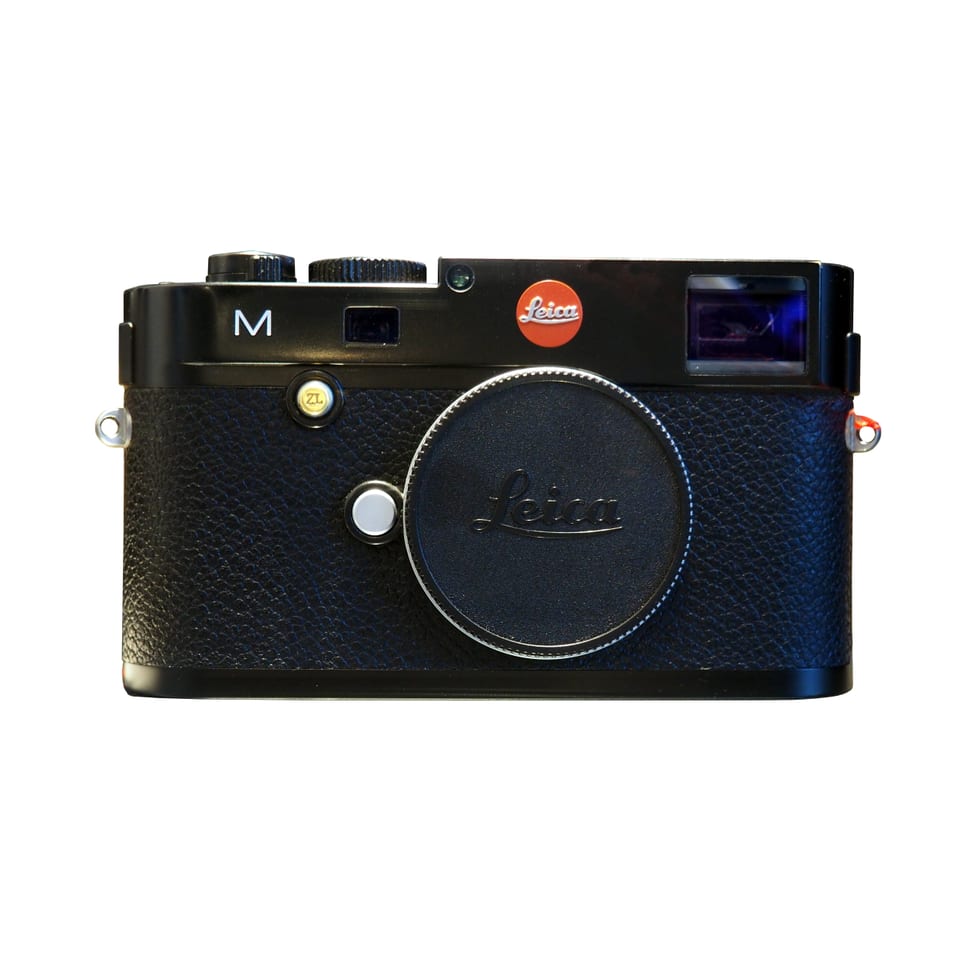
Mar 201313.5 yrs oldLeica M + your 40
Rama, CC BY-SA 3.0 FRFront and side to scale; dashed is the Leica CL + 40mm. 139×80 mm, 63 mm deep as carried.
Leica M (Typ 240) Over budget
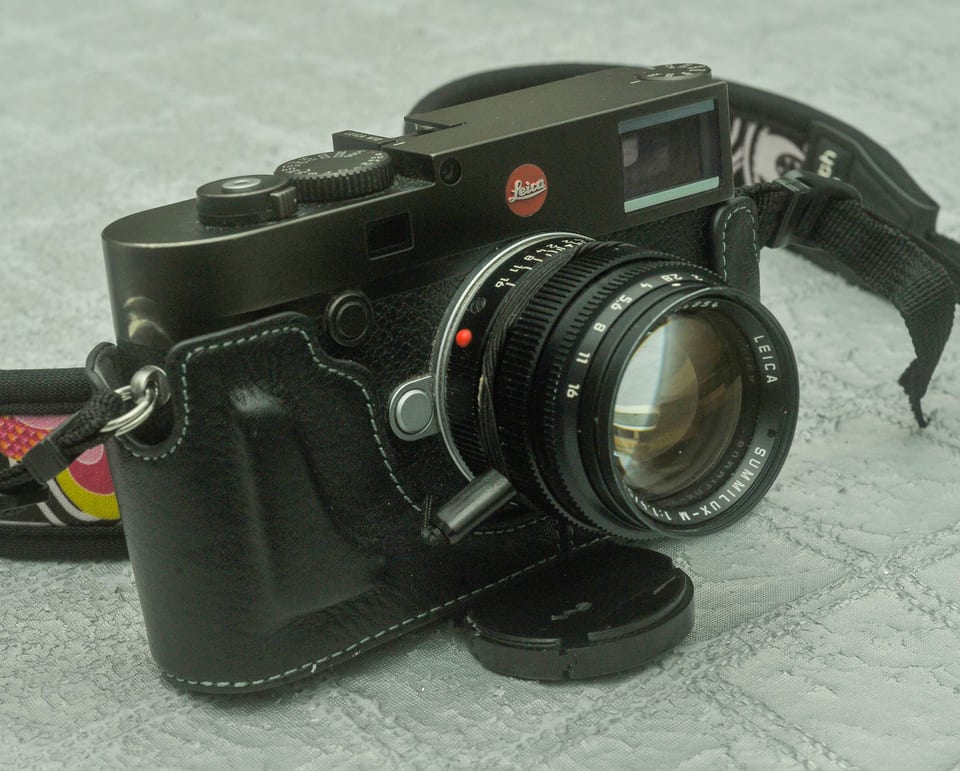
The cheapest modern M for your Summicron-C
A 24MP CMOS M with live view, a big battery and a 3-inch screen. With your Summicron-C it is about 63 mm deep, 9 mm closer to the CL than an RX1R II, and the lens is already paid for.
About 40 mm of body behind the lens mount (measured from scaled top views, ±2 mm), plus 23 mm of lens. Jacket pocket, RX1-class depth. 139 mm wide, 18 mm wider than the CL.
How to recognize it
Red dot on the front
Six-button column left of the 3" screen (the M10 has three)
No ISO dial on the top plate
Live view button and video record button
42 mm deep; noticeably thicker in the hand than any other M
Reliability history
Thin sourcing, not a clean bill. Forum reports of shutter lock-ups and frame-line LED faults exist but could not be tied to a documented failure rate. Rangefinder drift is ordinary M wear; DAG quotes roughly $140 for a Typ 240 calibration, Leica USA several hundred.
Aging platform. Firmware frozen since Feb 2021 and the BP-SCL2 cells on early bodies are past ten years. Budget for a fresh battery.
Used price
$3,400 typical · $3,200–$3,636
The lens is your own Summicron-C, so the body is the whole cost.
KEH had none. The B&H "Leica 60" edition at $14,999 is a collector set and excluded. Observed September 7, 2026 for the M-mount guide.
Launch price $6,950.
B&H Used $3,200 black, with multi-function handgrip
Adorama Used $3,636 Average, 100 Year Anniversary Edition black
Sensor Front-illuminated. The CCD corrosion problem does not apply to this or any later sensor.
Lens Your lens, so it adds nothing to the price. Compatible with every digital M and the Pixii Max: it brings up the 50 mm framelines on Leica rangefinders (the Pixii has a real 40 mm line), has no 6-bit code (set the lens type by hand), and users on the M9, M11-P and others report accurate focus wide open. Leica warned in 1973 that the pitched cam was only guaranteed on the CL, so check focus on the body you buy.
ISO Clean to 1600, usable to 3200 with noise reduction, banding shows at 6400. Pull to 100 available.
Autofocus Rangefinder focusing, like the CL. The Summicron-C couples down to 0.8 m.
Viewfinder Optical rangefinder like the CL's. The Summicron-C brings up the 50 mm framelines. Takes the Visoflex EVF2 for exact framing.
Shutter Metal focal-plane shutter with a motorized cocking system, quieter than the M9 but still a two-part sound. Leica later advertised the M-D (Typ 262) cocking as quieter than this one.
Stabilization No stabilization; the Summicron-C has none either.
Sealing The first M where Leica used "sealed against dust and water spray" language. No IP rating, and the lens mount and lenses are unsealed regardless.
Battery 7.4 V 1800 mAh, physically larger than the M9 or M10 packs and not interchangeable. Widely quoted around 500 shots. Genuine spares still sold; the cells are now a decade old on early bodies.
Storage No documented card problems. The M9 card horror stories do not apply here.
Firmware Final release 2.1.0.0, Feb 2021.
Verdict. The strongest case for stretching the budget: your own lens, rangefinder focusing like the CL, and a sensor that holds up to ISO 3200. It is 18 mm wider and 300 g heavier than the CL, and typical copies run about $3,400.
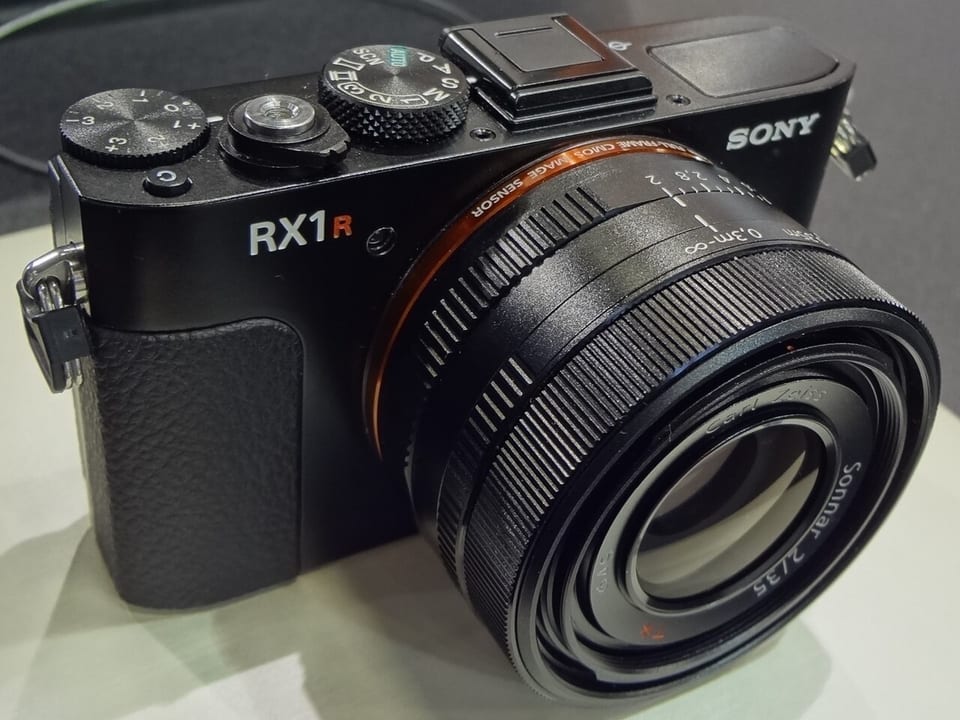
Jul 201313.2 yrs oldSony RX1
Solomon203, CC BY-SA 3.0Front and side to scale; dashed is the Leica CL + 40mm. 113×65 mm, 70 mm deep as carried.
Sony Cyber-shot DSC-RX1R In budget
RX1 without the AA filter
An RX1 with the anti-aliasing filter removed for a little more fine detail. Everything else, including the slow AF and small battery, is the same.
Sensor24.3 MP CMOSLens35mm f/2Usable ISO6,400 clean / 12,800 maxViewfinderOptional clip-onAutofocusContrast, slowShutterLeaf, to 1/4000StabilizationNoneScreen3" fixedSealingNoneBatteryCIPA 270Size482 g · 70 mm deepReliabilityC
In the pocket
Same body as the RX1. Jacket pocket.
How to recognize it
'RX1R' on the front. Otherwise identical to the RX1.
Reliability history
E61 lens / focus error. Rangefinderforum thread 'Error 61 on RX1R' describes the same stalled focus motor as the RX1. Test repeated power cycles.
Dust behind the fixed lens. Service-only cleaning; dust inside the lens means a lens replacement. Check a stopped-down sky frame.
Aging platform. Announced 2013. Contrast AF and small battery are design limits.
Used price
$975 typical · $946–$1,025
Three at B&H and four at KEH, all within $80 of each other. Adorama had none.
Sensor Same sensor as the RX1 with the optical low-pass filter removed for extra sharpness (Imaging Resource).
Lens Same lens and leaf shutter as the RX1.
ISO Native 100-25600, expandable 50-102400 (DPReview). Same sensor as RX1, so the RX1 reviewer judgments apply.
Autofocus Contrast-detect only; slow in dim light. Same contrast-detect system as the RX1 (DPReview spec).
Viewfinder None built in; FDA-EV1MK EVF or FDA-V1K optical finder optional. EVF accessory was $449.99 at launch (DPReview).
Shutter Leaf shutter, near silent. Same behavior as the RX1.
Stabilization None.
Sealing No weather sealing.
Battery Same as RX1. In-camera USB charging.
Firmware Not confirmed.
Verdict. Pick it over the RX1 only if the price is the same; the difference is small. The same E61 and dust checks apply.
Leica Q series 2015–present
Jun 201511.3 yrs oldLeica Q
Rama, CC BY-SA 2.0 frFront and side to scale; dashed is the Leica CL + 40mm. 130×80 mm, 93 mm deep as carried.
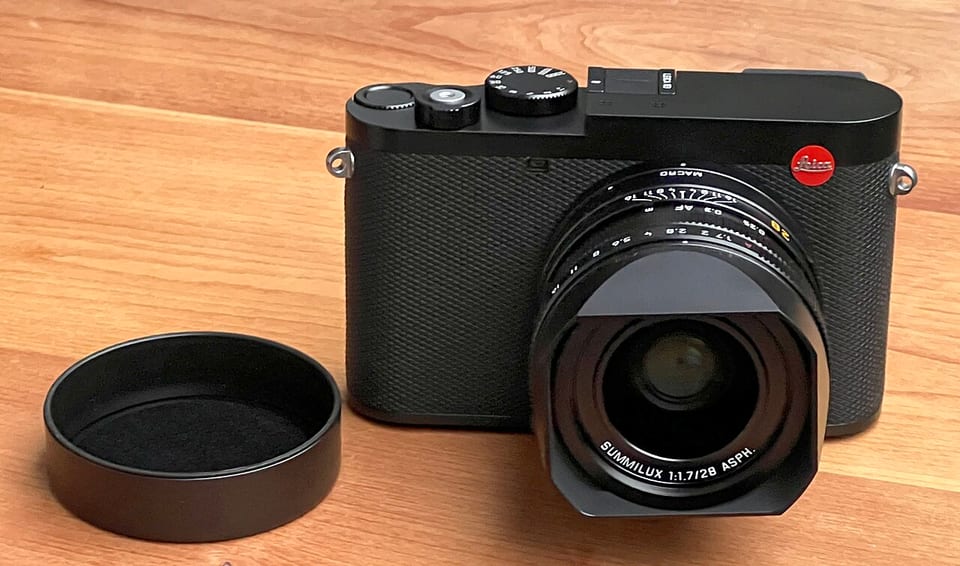
Leica Q (Typ 116) In budget
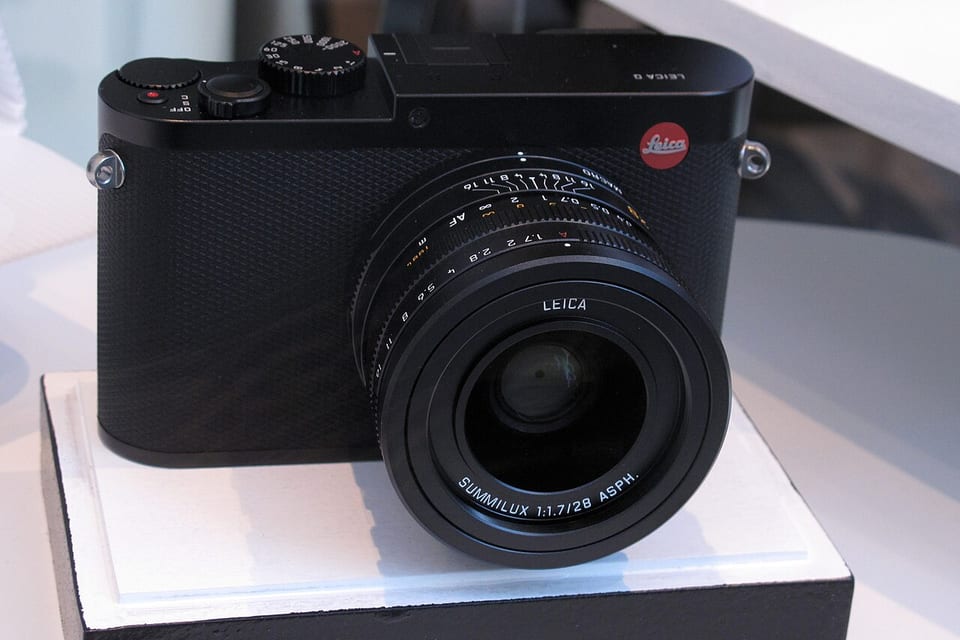
The first Q, cheapest way into the line
A 24MP full frame behind a stabilized 28mm f/1.7 Summilux with a leaf shutter and a built-in EVF. It is much bigger than an RX1.
Sensor24.2 MP CMOSLens28mm f/1.7Usable ISO6,400 clean / 12,800 maxViewfinderBuilt-in EVFAutofocusContrastShutterLeaf, to 1/2000StabilizationLens OISScreen3" fixed, touchSealingNoneBatteryCIPA 300Size640 g · 93 mm deepReliabilityC
In the pocket
Depth includes the fixed lens. Coat pocket at best. About 150 g heavier and 38 mm deeper than a CL with Summicron-C.
How to recognize it
Red dot on the front. The Q-P (Nov 2018) has a Leica script on the top plate instead, a quieter shutter and a revised power switch; same specs otherwise.
Reliability history
Service support uncertain. In an l-camera-forum thread (Oct-Nov 2025), one owner said Leica Germany declined to service a Typ 116 and offered a Q3 discount. Others said Leica USA still services it, and one reported a 'stop service order' on an EVF part. Confirm repairability before buying.
EVF coating scratches. The whole EVF must be replaced if the coated glass is damaged. Inspect the eyepiece.
Sensor dust. An early batch had dust problems (l-camera-forum). Out-of-warranty cleaning quoted at EUR 350 plus tax and 6 weeks in 2019.
Early faults list. A 2015 l-camera-forum thread lists clicking rear screens, AF motor grinding, EVF faults. Low counts, but check AF and LCD.
Used price
$2,756 typical · $2,212–$3,040
KEH had eight: black, silver and titanium gray. B&H had only a $7,400 Dubai special edition and Adorama was out of stock. The Q-P version was $3,662 at KEH.
Sensor 24MP CMOS designed by CMOSIS, made by STMicroelectronics (Wikipedia). No AA filter (DPReview).
Lens Optically stabilized. DPReview calls the lens 'superb'.
ISO Photography Blog: noise-free to 1600, 6400 and 12800 still usable. DPReview puts the practical limit around 6400 and notes banding in pushed Raws.
Autofocus Contrast-detect, fast in good light. Leica quoted 0.15 s. No phase detection.
Viewfinder Built-in 3.68M-dot LCoS EVF. La Vida Leica: the EVF coating scratches easily (metal glasses frames) and cannot be replaced alone; the whole EVF unit is swapped.
Shutter Leaf shutter, near silent. Flash sync to 1/500 per Leica data.
Stabilization Optical stabilization in the lens (OIS), not IBIS.
Sealing Not sealed (DPReview).
Battery Leica lists about 300 shots; DPReview's Q2 review cites 250 for the Q. No USB charging.
Firmware Red Dot Forum firmware master list.
Verdict. Great lens and handling, but 640 g and 93 mm deep makes it a shoulder-strap camera, not a CL in a pocket. The service question is the thing to settle before buying one.
Nov 201510.8 yrs oldSony RX1
AlonKopp, CC BY-SA 4.0Front and side to scale; dashed is the Leica CL + 40mm. 113×65 mm, 72 mm deep as carried.
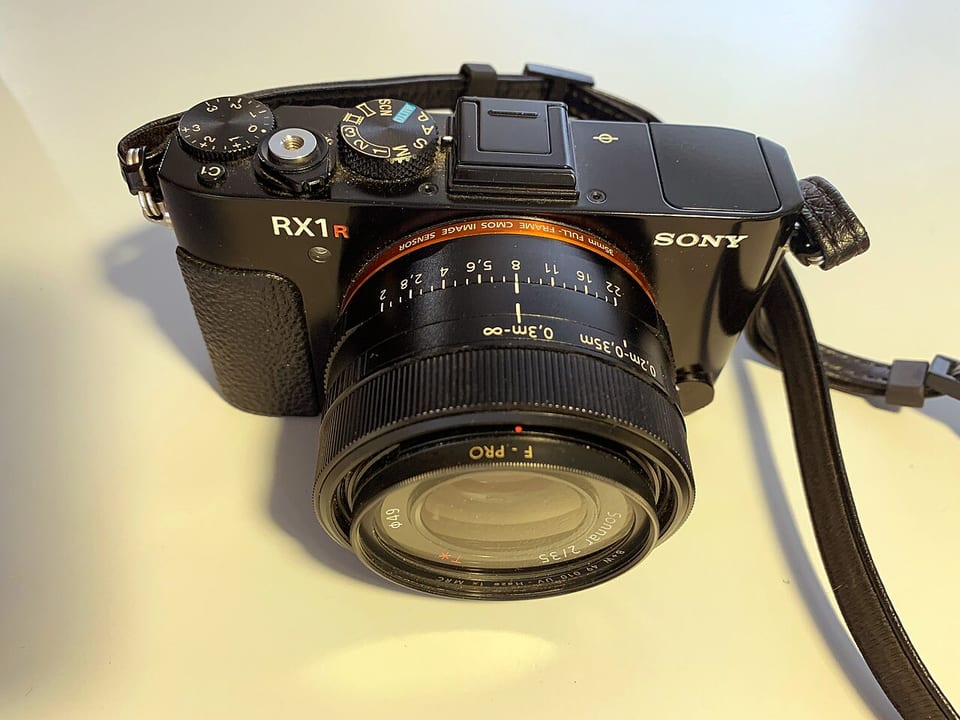
Sony Cyber-shot DSC-RX1R II In budget
The pocket 42MP with a finder
The RX1 body with the a7R II's 42MP sensor, hybrid AF, a tilting screen and a pop-up EVF. Sony marked it discontinued in Japan in March 2024, after about eight years on sale.
Sensor42.4 MP BSI-CMOSLens35mm f/2Usable ISO6,400 clean / 12,800 maxViewfinderPop-up EVFAutofocusHybrid PDAFShutterLeaf, to 1/4000StabilizationNoneScreen3" tiltingSealingNoneBatteryCIPA 220Size507 g · 72 mm deepReliabilityC
In the pocket
Depth includes the fixed lens. Jacket pocket. About 17 mm deeper and 20 g heavier than a CL with Summicron-C.
How to recognize it
'RX1R II' on the front; the EVF sits in the top-left of the top plate.
Reliability history
Pop-up EVF. A moving part in a pocket camera. No widespread failure pattern turned up, but forum reports include an EVF that went blue then black, and a diopter slider that would not hold position. Pop it up, check the image and diopter, and retract it several times.
E61 lens / focus error. Reported across the RX1 family. Test repeated power cycles and AF.
Sensor dust. Owners report dust specks visible from f/5.6 after a few years. Cleaning goes through the back of the camera and is a service job.
No sealing, poor battery. Design limits, not faults, but they shape how you carry it.
Used price
$2,275 typical · $2,179–$2,347
Adorama's only copy was sold for parts ($516: won't power on, damaged sensor), so it's left out of the range.
Sensor The a7R II sensor. Optical variable low-pass filter settable to off, standard or high, with bracketing (DPReview).
Lens DPReview (Mirrorlessons review) notes rainbow-type flare in direct sun.
ISO Native 100-25600, expandable 50-102400. Imaging Resource: 'nice 8 x 10 inch prints' up to ISO 12800. DPReview: 'nearly class-leading' Raw noise.
Autofocus Hybrid: 399-point phase detect plus contrast. DPReview: 'fast and accurate in most shooting situations', a bit slower than the a7R II because the whole lens unit moves.
Viewfinder Pop-up OLED EVF, 2.36M dots, 0.74x. Pops up in one motion (no push-pull like the RX100 III). Mirrorlessons: 'feels more solid' than the RX100 version.
Shutter Leaf shutter, near silent, no shutter shock (DPReview).
Stabilization None.
Sealing DPReview: no sealing, 'at this price, that's disappointing.'
Battery The weak point. DPReview got 'less than 100 shots' in cold weather. An external charger is in the box. In-camera USB charging not confirmed in the sources read. Carry two spares.
Firmware A DPReview forum snippet suggests 1.00 was never updated; not confirmed.
Verdict. The best fit for a digital CL under $3k: 17 mm deeper than the CL but the same pocket, a real finder, and image quality that still competes. Buy one with a tested EVF, and plan for spare batteries.
Jan 20179.7 yrs oldLeica M + your 40
BUTTON74, CC BY-SA 4.0Front and side to scale; dashed is the Leica CL + 40mm. 139×80 mm, 59.2 mm deep as carried.
Leica M10 Over budget
Film-M thickness, over budget
Back to film-M depth with an ISO dial and a quieter body. With your Summicron-C it is about 59 mm deep.
About 36.2 mm of body behind the lens mount (measured from scaled top views, ±2 mm), plus 23 mm of lens. Jacket pocket, about the CL's depth. 139 mm wide, 18 mm wider than the CL.
How to recognize it
Red dot present
ISO dial on the left of the top plate, the generation marker
Three rear buttons (Play, LV, Menu) plus the d-pad
Plastic hot-shoe cover (the M10-P has a metal one)
Non-touch screen (the M10-P and M10-R are touch)
Reliability history
Battery supply. Not a failure mode, but the BP-SCL5 shortage is the practical risk of owning this generation.
Firmware frozen. Final M10 release Nov 2022. A Jan 2026 Leica note claims Noctilux 35 f/1.2 support across all M10 cameras; check the downloads page before assuming it is closed.
Used price
$5,300 typical · $4,956–$5,484
The lens is your own Summicron-C, so the body is the whole cost.
The most widely stocked older body: six listings across all three retailers. Observed September 7, 2026 for the M-mount guide.
Sensor No low-pass filter; the cover glass doubles as the IR-cut filter, giving a thin stack that reduces corner smearing with wide M lenses.
Lens Your lens, so it adds nothing to the price. Compatible with every digital M and the Pixii Max: it brings up the 50 mm framelines on Leica rangefinders (the Pixii has a real 40 mm line), has no 6-bit code (set the lens type by hand), and users on the M9, M11-P and others report accurate focus wide open. Leica warned in 1973 that the pitched cam was only guaranteed on the CL, so check focus on the body you buy.
ISO Clean to 3200, usable to 6400, and 12,500 works in raw at a pinch. Ken Rockwell shoots it at 20,000 to 25,000 in raw; most people will not.
Autofocus Rangefinder focusing, like the CL. The Summicron-C couples down to 0.8 m.
Viewfinder Optical rangefinder like the CL's. The Summicron-C brings up the 50 mm framelines.
Shutter Mechanical only. No M10-generation body has an electronic shutter; the readout is too slow. The plain M10 is the loud one of the generation; the damped quiet shutter arrived with the M10-P.
Stabilization No stabilization; the Summicron-C has none either.
Sealing Leica makes no formal sealing claim for the M10. Third-party teardowns note improved rubber seals along the baseplate and the deleted EVF socket. Overgaard shot his in rain for years; keep the mount dry.
Battery CIPA 210 is the weakest of any digital M (real use is closer to 400 with the finder). The BP-SCL5 is chronically out of stock: it returned to B&H in Aug 2025 after a long gap and sold out again. Buy spares when you see them.
Storage Single slot, no internal storage, no known compatibility issue.
Firmware Final 3.22.23.38, Nov 2022.
Verdict. The best-feeling digital M for your lens, at about $5,300 used. See the M-mount guide for the whole family.
Mar 20197.5 yrs oldLeica Q
Ferencvizi, CC BY-SA 4.0Front and side to scale; dashed is the Leica CL + 40mm. 130×80 mm, 91.9 mm deep as carried.
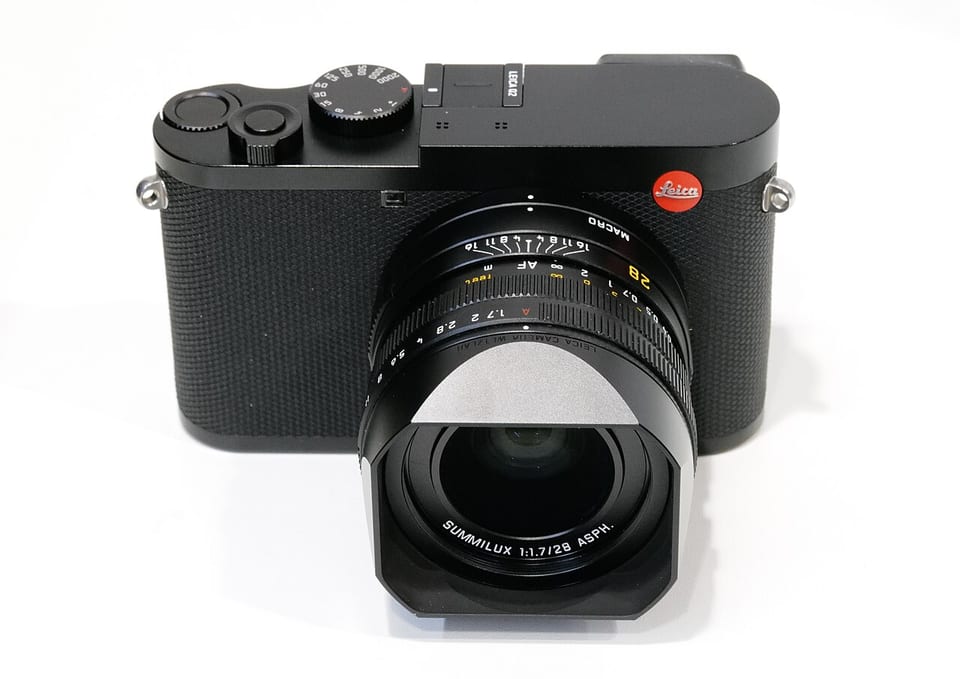
Leica Q2 Over budget
Sealed 47MP Q
The Q body with a 47MP sensor, IP52 sealing, an OLED finder and a bigger battery. Focus is still contrast-detect.
Sensor47.3 MP CMOSLens28mm f/1.7Usable ISO3,200 clean / 6,400 maxViewfinderBuilt-in EVFAutofocusContrastShutterLeaf, to 1/2000StabilizationLens OISScreen3" fixed, touchSealingIP52BatteryCIPA 350Size734 g · 91.9 mm deepReliabilityB
In the pocket
Leica data sheet. Coat pocket at best. About 240 g heavier than a CL with Summicron-C.
How to recognize it
Red dot, 'Q2' engraved on the top plate. Several special editions exist (not researched here).
Reliability history
Sensor dust. Dust behind the fixed lens needs Leica service. Owners report about $275 and 9-10 weeks at Leica New Jersey out of warranty.
Isolated system errors. Forum reports of 'system error (focus)', stuck PASM, AF/OIS faults and debris inside the EVF. No systemic pattern found.
Aging but supported. Firmware stopped at 5.1.0 in Dec 2023 after the Q3 launched.
Used price
$3,969 typical · $3,800–$4,378
The Q2 Reporter edition runs about the same ($3,865 at KEH, $4,187 at Adorama). Adorama had no standard Q2.
Sensor 47.3MP effective (50.4MP total). DPReview says it appears similar to the Lumix S1R sensor. AA filter status not confirmed in sources read.
Lens Optically stabilized. Crops are 30MP, 15MP and 7MP.
ISO DPReview: high ISO 'falls behind its contemporaries' by about a stop. Usable values are the guide's reading of that.
Autofocus Contrast-detect. Leica data lists a contrast-based system. DPReview: 'solidly adequate, rather than impressive', with continuous-AF flutter.
Viewfinder Built-in OLED EVF, 3.68M dots, 0.76x. Same resolution as the Q but OLED, which DPReview calls a significant step up.
Shutter Leaf shutter, near silent. Leica's data sheet says sync up to 1/500; DPReview's review says 1/2000. Leica's figure used here.
Stabilization Optical stabilization in the lens.
Sealing Same IP52 rating as the SL (DPReview).
Battery Leica says about 350; DPReview says 370. No USB charging (DPReview con).
Firmware Red Dot Forum.
Verdict. A better camera than the Q, but the same 90 mm-deep, 734 g package, so it is a bag camera, not a CL replacement. Check for sensor dust.
Small interchangeable bodies with a thin 40 2019–present
Oct 20196.9 yrs oldInterchangeable
昼落ち, CC BY-SA 4.0Front and side to scale; dashed is the Leica CL + 40mm. 112.6×69.9 mm, 80.9 mm deep as carried.
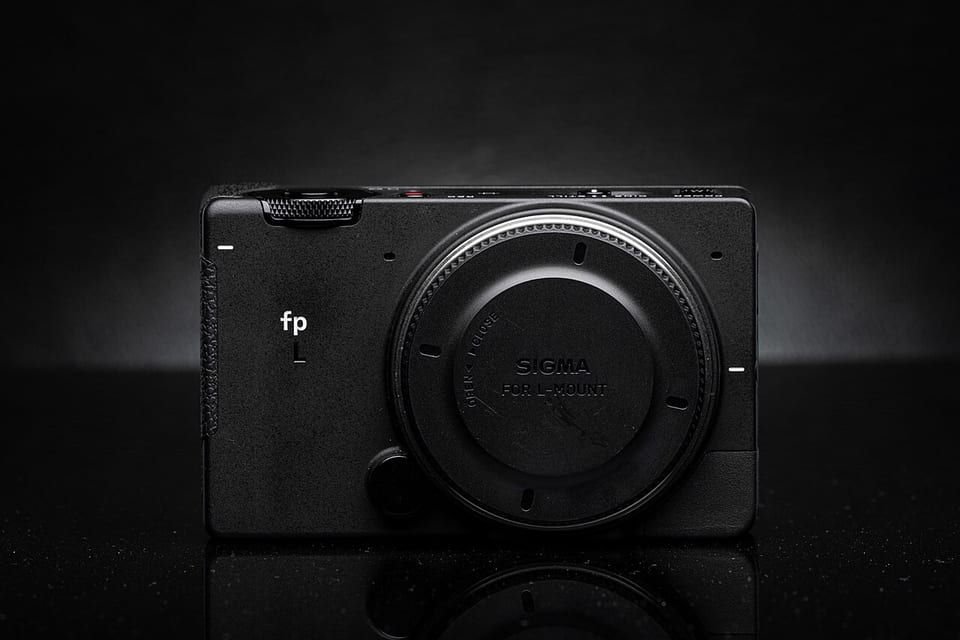
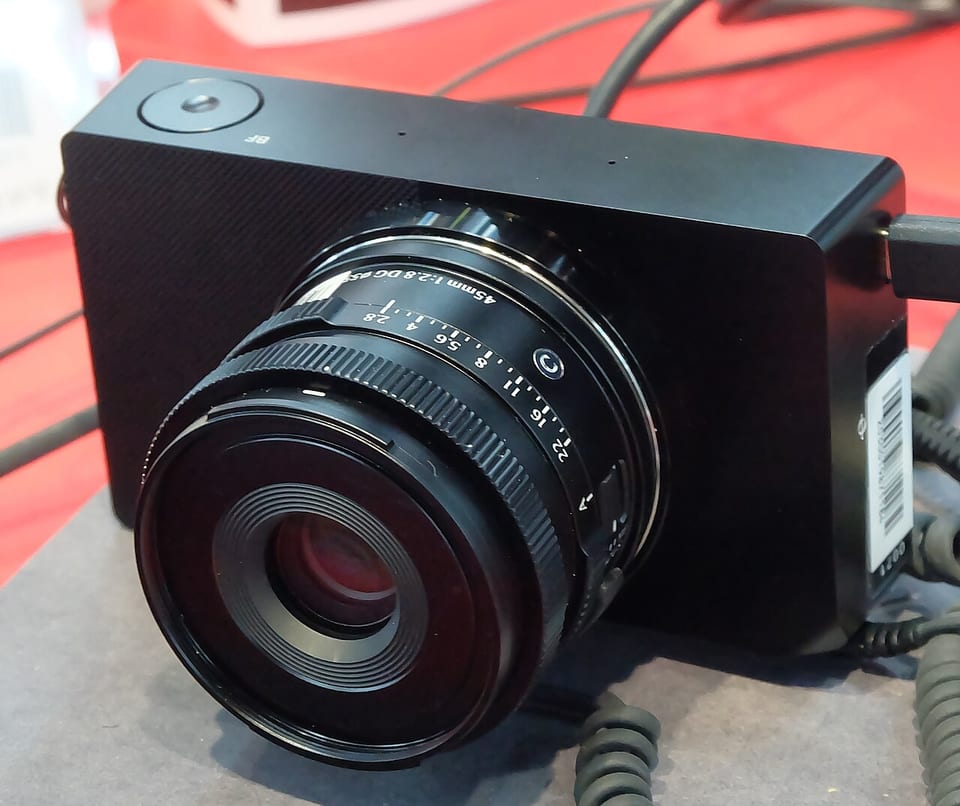
Sigma fp In budget
Tiny L-mount brick
The smallest full-frame interchangeable body when it launched: a 24MP BSI sensor, no finder, no mechanical shutter, no grip. Its heat sink doubles as the back of the camera.
Sensor Bayer BSI sensor, Sigma's first non-Foveon full frame.
Lens Autofocus, 40.9 mm long, 144 g, sealed. Announced April 2026; no used copies yet, so the price is new ($398 at B&H). The Lumix S 26mm f/8 is the thin alternative: about 23 mm shorter, fixed f/8.
ISO Expandable 6-102400. Photography Blog: great results to 3200; 6400-12800 noisier 'although the effect is not unattractive'.
Autofocus Contrast-detect only. No phase detection.
Viewfinder None; LVF-11 loupe optional. EVF-11 finder was launched with the fp L and also fits the fp (not confirmed here).
Shutter No mechanical shutter. Rolling-shutter skew on moving subjects and banding under artificial light (Photo Review). Silent, but not a leaf shutter.
Stabilization None.
Sealing DPReview lists it as environmentally sealed.
Battery USB charging.
Firmware Sigma firmware page.
Verdict. With the Lumix 40mm f/2 it is about 81 mm deep, 9 mm more than an RX1R II, for much less money. Contrast AF, no finder and the electronic shutter are the price.
Front and side to scale; dashed is the Leica CL + 40mm. 128×74.8 mm, 53.3 mm deep as carried.
Fujifilm X100V In budget
The X100VI without IBIS, and lighter
A 26MP APS-C sensor, the same redesigned 23mm f/2, the hybrid finder and leaf shutter, and no stabilization. 53 mm deep and 478 g: slightly smaller and lighter than your CL with its lens.
Sensor26.1 MP APS-C BSILens35mm eq. f/2Usable ISO3,200 clean / 6,400 maxViewfinderHybrid optical/EVFAutofocusHybrid PDAFShutterLeaf, 1/2000 at f/2StabilizationNoneScreen3" tilting, touchSealingSplash resistantBatteryCIPA 420Size478 g · 53.3 mm deepReliabilityA
In the pocket
53.3 mm including the lens, before the cap: the CL's depth to within a millimeter. Jacket pocket. 478 g.
Reliability history
Close focus at f/2 much improved over X100F, still soft. New lens usable wide open at minimum focus, unlike the X100F glow.
Aperture ring not registering (isolated forum report). By-wire ring; one reconditioned unit. Not the X100/X100S sticky-blade pattern.
Sensor dust (forum, uncommon). Factory service.
Used price
$1,936 typical · $1,543–$2,057
KEH only; B&H had none. Adorama not checked (blocked).
Sensor X-Trans CMOS 4 (BSI), APS-C 23.5 x 15.6 mm. About 0.65 stop behind the RX1R II; slightly better than the X100VI. (PhotonsToPhotos). The lens's f/2 gives the depth of field of f/3 on full frame.
Lens Redesigned 23mm f/2 (II). AR-X100 for 49 mm filters. Built-in 4-stop ND filter. Focuses to 10 cm but is soft there at f/2.
ISO Estimate: PhotonsToPhotos measures it 0.66 stop behind the RX1R II, so about a stop below the full-frame numbers here.
Autofocus Hybrid PDAF + contrast
Viewfinder Optical finder with an electronic overlay, or a 3.69M-dot EVF. The closest thing to the CL's window finder in a digital camera.
Shutter Leaf shutter, near silent; 1/4000 from about f/4.5, electronic to 1/32000 or faster.
Stabilization No stabilization, like the CL.
Sealing Weather resistant only with the AR-X100 adapter ring and a PRF-49 filter; the ring adds 9 mm.
Battery CIPA 420 OVF / 350 EVF. USB-C charging.
Firmware 3.01 (2023-07-04).
Verdict. It fails the checklist only on stabilization, which your CL never had. Used prices are high for a 2020 camera because the X100VI is hard to buy.
Front and side to scale; dashed is the Leica CL + 40mm. 134×100.5 mm, 77.6 mm deep as carried.
Nikon Z5 In budget
The cheapest full frame with a finder and IBIS
Nikon's entry full-frame body: 24MP, 5-stop IBIS, a good EVF and two SD slots. Succeeded by the Z5II in 2025.
Sensor24.3 MP CMOSLens40mm f/2 (Septon)Usable ISONot researchedViewfinderBuilt-in EVFAutofocusManual with the SeptonShutterFocal-plane, 1/8000Stabilization5-stop IBISScreen3.2" tilting, touchSealingNot statedBatteryCIPA 390Size880 g · 77.6 mm deepReliabilityA
In the pocket
About 45.6 mm of body behind the lens mount (measured from scaled top views, ±2 mm), plus 32 mm of lens. The eyecup adds more: about 93.9 mm overall. Big jacket or coat pocket. 880 g with the lens.
Reliability history
No widely reported failure mode specific to this body.
Used price
$880 typical · $791–$985
Plus ~$587 for the Septon 40mm f/2: about $1,467 ready to shoot.
Lens The Z version is 32 mm from the flange, not 30, and 205 g with a wider barrel. Manual focus with EXIF and focus aids. B&H had a used copy at $587; new $699.
ISO Not researched for this guide.
Autofocus Phase-detect AF with Nikon lenses; the Septon is manual focus with focus aids.
Viewfinder yes, 3.69M dots. The grip sits about 24 mm ahead of the mount and hides part of the lens.
Shutter mechanical 1/8000
Stabilization yes, 5-axis
Sealing Not stated in the sources read.
Battery CIPA 390-470.
Verdict. About 78 mm with the Septon for about $1,470 all in: the cheapest way to a finder, IBIS and full frame near RX1 depth, if you accept the size of the grip and the weight.
Zeiss ZX1 and Fujifilm GFX100RF 2020–present
Oct 20205.9 yrs oldOther fixed-lens
Peachyeung316, CC BY-SA 4.0Front and side to scale; dashed is the Leica CL + 40mm. 142×93 mm, 94 mm deep as carried.
Zeiss ZX1 No price
The Android Zeiss
A 37MP full frame with a 35mm f/2 leaf-shutter lens, a 4.3 in screen, 512 GB internal storage and Lightroom running on Android. Zeiss discontinued it after about two and a half years.
Sensor37.4 MP CMOSLens35mm f/2Usable ISO3,200 clean / 6,400 maxViewfinderBuilt-in EVFAutofocusContrastShutterLeaf, to 1/2000StabilizationNoneScreen4.34" fixed, touchSealingNot statedBatteryCIPA 250Size837 g · 94 mm deepReliabilityD
In the pocket
Body 46 mm deep, 94 mm with lens (Wikipedia). Weight 837 g per Wikipedia, 800 g per DPReview. Bag camera, not a pocket camera.
How to recognize it
Large rear screen, no card door, Zeiss logo on the front.
Reliability history
Abandoned platform. Zeiss discontinued it in February 2023. The last firmware was 1.4 in May 2021 (PetaPixel). Repair and parts availability after discontinuation were not confirmed; treat any fault as possibly unrepairable.
Software bugs. Amateur Photographer reports the touchscreen stopping and Lightroom crashing. DPReview: 10-20 s startup and 'occasionally sluggish operation'.
Android and Lightroom Mobile aging. The built-in Lightroom is frozen at whatever the last firmware shipped. Unknown how long app pairing keeps working.
Used price
No used stock found
No stock at B&H (listed as no longer available), KEH, or MPB. The only eBay listing on the observation date was a prototype at $3,999. Adorama was not checked (blocked).
ISO DPReview: Raw files show 'more luminance noise (grain) than its peers'. Usable values are the guide's reading of that.
Autofocus Contrast-detect; face detect added in firmware 1.4. DPReview: 'fairly basic' and 'occasionally unreliable', with front- and back-focus on still subjects.
Viewfinder Built-in OLED EVF, 1920x1080, 0.74x.
Shutter Leaf shutter, near silent (DPReview review).
Stabilization None.
Sealing Not confirmed in sources read.
Battery Zeiss quoted about 250 shots in a CIPA-like test. DPReview says sleep mode drains the battery; power down fully.
Firmware PetaPixel says nothing came after the 2021 update.
Verdict. Too big to pocket and orphaned by its maker. Skip it.
Oct 20205.9 yrs oldInterchangeable
Henry Söderlund, CC BY 2.0Front and side to scale; dashed is the Leica CL + 40mm. 124×71.1 mm, 73.1 mm deep as carried.
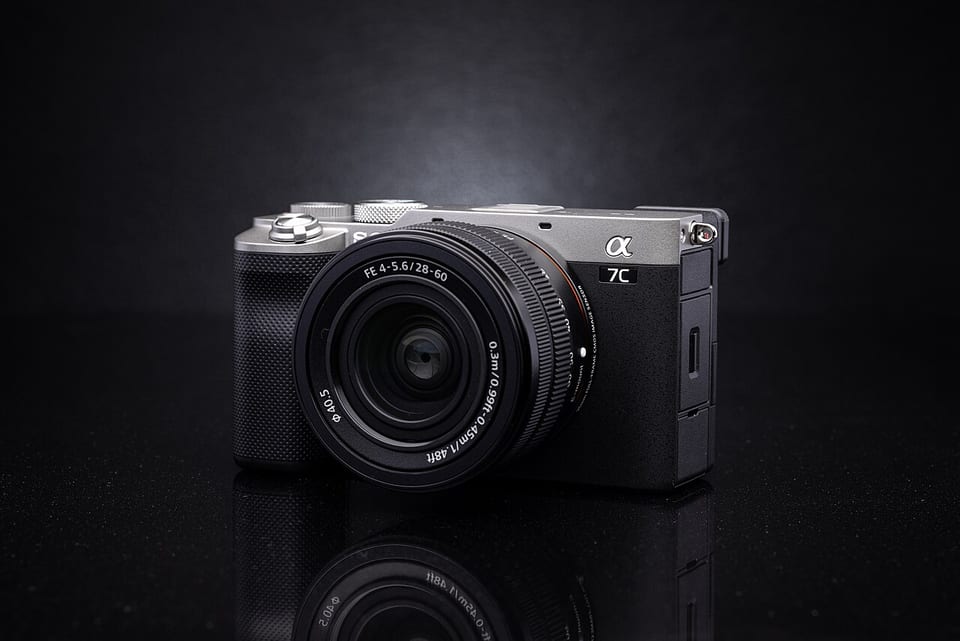
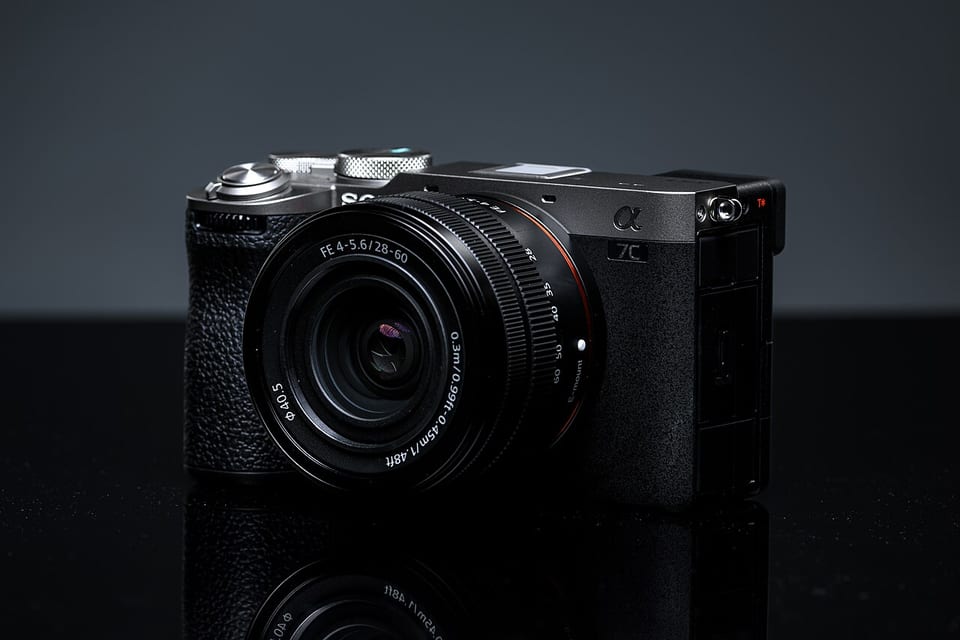
Sony Alpha 7C (ILCE-7C) In budget
Cheapest small full frame with a finder and IBIS
An a7 III-class 24MP sensor with IBIS and a corner EVF in a rangefinder-shaped body. The battery lasts about 740 shots.
Lens Manual focus, but with electronic contacts: EXIF, focus magnification and peaking, and distance data for IBIS. 30 mm from the mount, 165 g. Reviews note soft corners and some CA wide open. Released spring 2026; B&H had used copies at $573 and $587, new $699.
ISO Expandable 50-204800. No direct reviewer judgment captured; values are the guide's inference from the a7 III-class sensor.
Autofocus Hybrid phase detect with real-time eye AF.
Viewfinder Corner EVF, 2.36M dots, 0.59x. Small finder.
Shutter Focal-plane shutter, audible. Not a leaf shutter.
Stabilization 5-stop sensor-shift.
Sealing Dust and moisture resistant (DPReview).
Battery 740 shots on the LCD. USB charging.
Firmware Per Sony regional support listings in search results; pages blocked direct fetch.
Verdict. With the Septon it is about 73 mm deep, a millimeter more than an RX1R II, and adds a finder, IBIS and a 740-shot battery for about $1,800 all in. The Septon is manual focus; the grip sits ahead of the mount and hides some of the lens.
Nov 20205.8 yrs oldLeica Q
Peachyeung316, CC BY-SA 4.0Front and side to scale; dashed is the Leica CL + 40mm. 130×80 mm, 91.9 mm deep as carried.
Leica Q2 Monochrom Over budget
Black-and-white Q2
The Q2 with a monochrome sensor. Same body, lens, sealing and contrast AF.
Sensor47.3 MP CMOS monoLens28mm f/1.7Usable ISO12,500 clean / 25,000 maxViewfinderBuilt-in EVFAutofocusContrastShutterLeaf, to 1/2000StabilizationLens OISScreen3" fixed, touchSealingIP52BatteryCIPA 350Size734 g · 91.9 mm deepReliabilityB
In the pocket
Weight from DPReview. Dimensions assumed same as Q2; not independently confirmed. Coat pocket at best.
How to recognize it
No red dot; 'Q2 Monochrom' markings; black chrome finish.
Reliability history
Stuck pixels at high ISO. Leica acknowledged hot/stuck pixels at ISO 3200-16000 in April 2021 and added user pixel mapping by firmware. Test: cap on, 1/125, step ISO 200 to 12500, look for white dots, then run pixel mapping.
Sensor dust. Same service-only cleaning as the Q2.
Sensor Monochrome version of the Q2 sensor, no color filter array.
Lens Crop modes assumed same as Q2; not separately confirmed.
ISO No reviewer gave a clean-to-print number. A monochrome sensor skips demosaicing and gains about a stop over the color Q2; these figures are the guide's estimate on that basis, not a quote.
Autofocus Contrast-detect. Same system as the Q2.
Viewfinder Built-in OLED EVF, 3.69M dots, 0.76x.
Shutter Leaf shutter, near silent. Sync 1/500 per DPReview spec.
Stabilization Optical stabilization in the lens.
Sealing Sealed per DPReview; rating assumed same as Q2.
Battery No USB charging.
Firmware Shares firmware numbering with the Q2 since 5.0.
Verdict. Only for someone who shoots black and white exclusively, and it is as bulky as the Q2. Run the pixel-mapping test before buying.
Apr 20215.4 yrs oldInterchangeable
Henry Söderlund, CC BY 2.0Front and side to scale; dashed is the Leica CL + 40mm. 112.6×69.9 mm, 80.5 mm deep as carried.
Sigma fp L In budget
61MP fp with phase detect
The fp body with a 61MP sensor and phase-detect AF, plus an optional clip-on EVF. Same electronic-only shutter.
Lens Autofocus, 40.9 mm long, 144 g, sealed. Announced April 2026; no used copies yet, so the price is new ($398 at B&H). The Lumix S 26mm f/8 is the thin alternative: about 23 mm shorter, fixed f/8.
ISO Expandable 6-102400. No direct reviewer ISO judgment captured; values are the guide's inference for a 61MP sensor with no IBIS.
Autofocus Hybrid phase detect plus contrast. Adds phase detection over the fp.
Viewfinder Optional EVF-11, 3.68M dots, 0.83x. Sold as a $2,999 kit with the finder.
Shutter No mechanical shutter; slower readout than the fp, so flash only to 1/15 and more rolling shutter.
Stabilization None.
Sealing DPReview lists it as sealed.
Battery USB charging.
Firmware Sigma firmware page.
Verdict. The highest resolution per cubic centimeter here, but slow readout and no stabilization make 61MP hard to use handheld. About 81 mm deep with the Lumix 40mm.
May 20233.3 yrs oldLeica Q
Burkhard Mücke, CC BY 4.0Front and side to scale; dashed is the Leica CL + 40mm. 130×80.3 mm, 92.6 mm deep as carried.
Leica Q3 Over budget
Current 28mm Q
The Q body with a 60MP BSI sensor, phase-detect AF, a tilting screen, USB-C charging and IP52 sealing. Still a 28mm f/1.7 Summilux with a leaf shutter.
Sensor60.3 MP BSI-CMOSLens28mm f/1.7Usable ISO6,400 clean / 12,500 maxViewfinderBuilt-in EVFAutofocusHybrid PDAFShutterLeaf, to 1/2000StabilizationLens OISScreen3" tilting, touchSealingIP52BatteryCIPA 350Size743 g · 92.6 mm deepReliabilityA
In the pocket
Coat pocket at best. About 250 g heavier than a CL with Summicron-C.
How to recognize it
Tilting screen and a 'Q3' engraving distinguish it from the Q2.
Reliability history
Early freezing, fixed. Launch units froze and sometimes would not power off; firmware 1.2 and 1.3 (2023) addressed it.
Grip battery drain. The HG-DC1 grip can drain the battery while the camera is off (l-camera-forum).
Used price
$6,200 typical · $5,399–$7,350
Adorama listed used Q3s from $5,399 before it stopped serving pages to the browser; the per-grade detail was not read.
Sensor Same 60MP class of sensor as the M11 and a7R V (Wikipedia). Triple-resolution DNG (60/36/18MP).
Lens Optically stabilized.
ISO Photography Blog: noise-free JPEGs to 3200, some noise at 6400, 12500-25000 'still usable', avoid 50000+.
Autofocus Hybrid phase detect, contrast and depth-from-defocus; face/body detection. Firmware 4.0 (Dec 2025) reworked the UI after the SL3 and improved AF.
Viewfinder Built-in OLED EVF, 5.76M dots, 0.79x.
Shutter Leaf shutter, near silent. Flash sync at all mechanical speeds (DPReview).
Stabilization Optical stabilization in the lens.
Sealing Sealed per DPReview; IP52 same as the Q3 43.
Battery USB-C charging. Optional HG-DC1 wireless charging grip; owners report it drains the battery when the camera is off.
Firmware Leica Rumors; applies to the Q3 line.
Verdict. An excellent camera that is neither pocketable nor likely to be $3k used yet. Listed for comparison.
Aug 20233.1 yrs oldInterchangeable
Henry Söderlund, CC BY 2.0Front and side to scale; dashed is the Leica CL + 40mm. 124×71.1 mm, 74.1 mm deep as carried.
Sony Alpha 7C II (ILCE-7CM2) In budget
Current small Sony all-rounder
The a7C body with a 33MP sensor, better AF, 7-stop IBIS, a bigger finder and a second dial.
Lens Manual focus, but with electronic contacts: EXIF, focus magnification and peaking, and distance data for IBIS. 30 mm from the mount, 165 g. Reviews note soft corners and some CA wide open. Released spring 2026; B&H had used copies at $573 and $587, new $699.
ISO DPReview: 'just a bit noisier than other cameras in its class', noise 'well-controlled'.
Autofocus Phase detect with AI subject recognition. Recognizes people, animals, birds, insects, vehicles and aircraft (DPReview).
Shutter Focal-plane with electronic first curtain. DPReview notes heavy rolling shutter in e-shutter mode.
Stabilization 7 stops (DPReview).
Sealing Dust and moisture resistant (DPReview).
Battery About 510-540 shots CIPA; DPReview says about 25 percent less than the a7C. USB-C charging.
Firmware Sony Addict, 2025-11-18.
Verdict. About 74 mm with the Septon: the RX1R II's depth, plus a finder, 7-stop IBIS, modern autofocus with other lenses, and all-day battery, for about $2,770 ready to shoot.
Aug 20233.1 yrs oldInterchangeable
Henry Söderlund, CC BY 2.0Front and side to scale; dashed is the Leica CL + 40mm. 124×71.1 mm, 74 mm deep as carried.
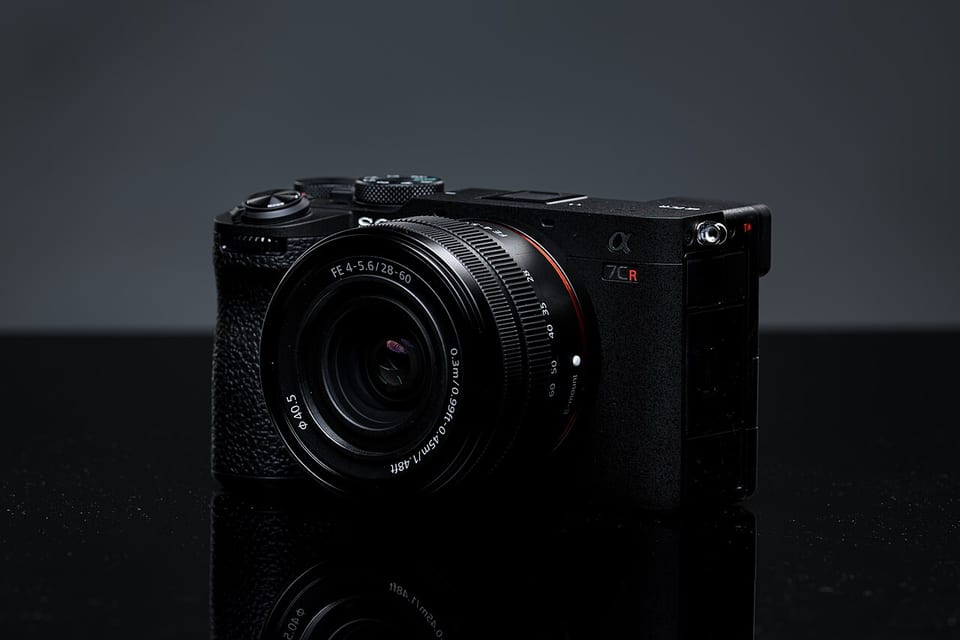
Sony Alpha 7CR (ILCE-7CR) Stretch
61MP in the a7C body
The a7C II body with the 61MP a7R V sensor, 7-stop IBIS and the same small 0.7x finder.
Sensor Same 60MP-class sensor as the a7R V, RX1R III and Leica Q3.
Lens Manual focus, but with electronic contacts: EXIF, focus magnification and peaking, and distance data for IBIS. 30 mm from the mount, 165 g. Reviews note soft corners and some CA wide open. Released spring 2026; B&H had used copies at $573 and $587, new $699.
ISO No direct reviewer ISO judgment captured; values are the guide's inference from the a7R V sensor.
Autofocus Phase detect with AI subject recognition. Same AF generation as the a7C II.
Viewfinder Corner EVF, 2.36M dots, 0.7x. DPReview: 'downright rudimentary' next to the a7R V.
Shutter Focal-plane shutter, audible.
Stabilization 7 stops (DPReview).
Sealing Dust and moisture resistant.
Battery 530 on the LCD, about 490 with the EVF. DPReview says battery life impresses. USB-C charging.
Firmware Sony Addict, 2025-11-18.
Verdict. The same 74 mm package with 61MP. Just over budget with the Septon, at about $3,360.
Front and side to scale; dashed is the Leica CL + 40mm. 144×103 mm, 77.1 mm deep as carried.
Nikon Zf In budget
Film-camera dials, full frame, Septon-ready
Nikon's retro full-frame body with shutter, ISO and exposure dials, IBIS and a real EVF. The grip is shallow, so the Septon adds almost all its length.
Sensor24.5 MP BSI-CMOSLens40mm f/2 (Septon)Usable ISONot researchedViewfinderBuilt-in EVFAutofocusManual with the SeptonShutterFocal-plane, 1/8000Stabilization8-stop IBISScreen3.2" vari-angle, touchSealingNot statedBatteryCIPA 360Size915 g · 77.1 mm deepReliabilityA
In the pocket
About 45.1 mm of body behind the lens mount (measured from scaled top views, ±2 mm), plus 32 mm of lens. The eyecup adds more: about 87 mm overall. Big jacket or coat pocket. 915 g with the lens.
Reliability history
No widely reported failure mode specific to this body.
Used price
$1,845 typical · $1,672–$1,933
Plus ~$587 for the Septon 40mm f/2: about $2,432 ready to shoot.
Lens The Z version is 32 mm from the flange, not 30, and 205 g with a wider barrel. Manual focus with EXIF and focus aids. B&H had a used copy at $587; new $699.
ISO Not researched for this guide.
Autofocus Phase-detect AF with Nikon lenses; the Septon is manual focus with focus aids.
Viewfinder yes, 3.69M dots. The round eyepiece sits right behind the lens axis.
Shutter mechanical 1/8000, EFCS, electronic
Stabilization yes, 5-axis, 8 stops
Sealing Not stated in the sources read.
Battery CIPA 360-430.
Verdict. About 77 mm with the Septon and 915 g: dials that feel like a film camera, but a coat-pocket package. About $2,430 ready to shoot.
Feb 20242.6 yrs oldAPS-C
Henry Söderlund, CC BY 2.0Front and side to scale; dashed is the Leica CL + 40mm. 128×74.8 mm, 55.3 mm deep as carried.
Fujifilm X100VI In budget
The one smaller sensor that earns its place
A 40MP APS-C sensor behind a 35mm-equivalent f/2 with a leaf shutter, a hybrid optical finder, 6-stop IBIS, and shutter, ISO and aperture controls on the body. It is the size of your CL to the millimeter.
Sensor40.2 MP APS-C BSILens35mm eq. f/2Usable ISO3,200 clean / 6,400 maxViewfinderHybrid optical/EVFAutofocusHybrid PDAFShutterLeaf, 1/2000 at f/2Stabilization6-stop IBISScreen3" tilting, touchSealingSplash resistantBatteryCIPA 450Size521 g · 55.3 mm deepReliabilityB
In the pocket
55.3 mm including the lens, before the cap: the CL's depth to within a millimeter. Jacket pocket. 521 g.
Reliability history
Soft at f/2 up close. Same 23mm f/2 as the X100V; DPReview says the lens is not the sharpest wide open and close up, and whether it resolves 40MP is debated.
Early-production QC. Long-term reviewer: dial play, heat warnings at 26-30 C, paint damage on an early unit; later units better.
Sensor dust (forum). Fixed lens, so dust needs factory service.
Used price
~$1,799 $1,799 elsewhere
No used copies at B&H or KEH; Adorama was not checked (blocked). New stock has been backordered since launch.
Fallback: new, when you can get one; listed at $1,799 at Adorama earlier in the day. Fujifilm US list price.
Launch price $1,599.
Sensor X-Trans CMOS 5 HR (BSI), APS-C 23.5 x 15.7 mm. About 0.8 stop behind the RX1R II at the same ISO; the 40MP sensor measures slightly worse than the X100V/X100F sensors. (PhotonsToPhotos). The lens's f/2 gives the depth of field of f/3 on full frame.
Lens No thread on the bare lens; AR-X100 ring (9 mm deep) gives 49 mm. Built-in 4-stop ND filter. Focuses to 10 cm but is soft there at f/2.
ISO Estimate: PhotonsToPhotos measures it 0.84 stop behind the RX1R II, so about a stop below the full-frame numbers here.
Autofocus DPReview found subject tracking weak.
Viewfinder Optical finder with an electronic overlay, or a 3.69M-dot EVF. The closest thing to the CL's window finder in a digital camera.
Shutter Leaf shutter, near silent; 1/4000 from about f/4.5, electronic to 1/32000 or faster.
Stabilization Six stops, about 5.5 with the optical finder (DPReview). The first X100 with IBIS.
Sealing Weather resistant only with the AR-X100 adapter ring and a PRF-49 filter; the ring adds 9 mm.
Battery CIPA 450 OVF / 310 EVF. USB-C charging.
Firmware 1.31 (2025-07-26).
Verdict. If any camera is the digital CL, it is this one, at about 0.8 stop of noise and a stop of background blur behind the RX1R II. It is still backordered new and none were for sale used at B&H or KEH.
Jun 20242.3 yrs oldInterchangeable
TTTNIS, CC0 1.0Front and side to scale; dashed is the Leica CL + 40mm. 126×73.9 mm, 86.5 mm deep as carried.
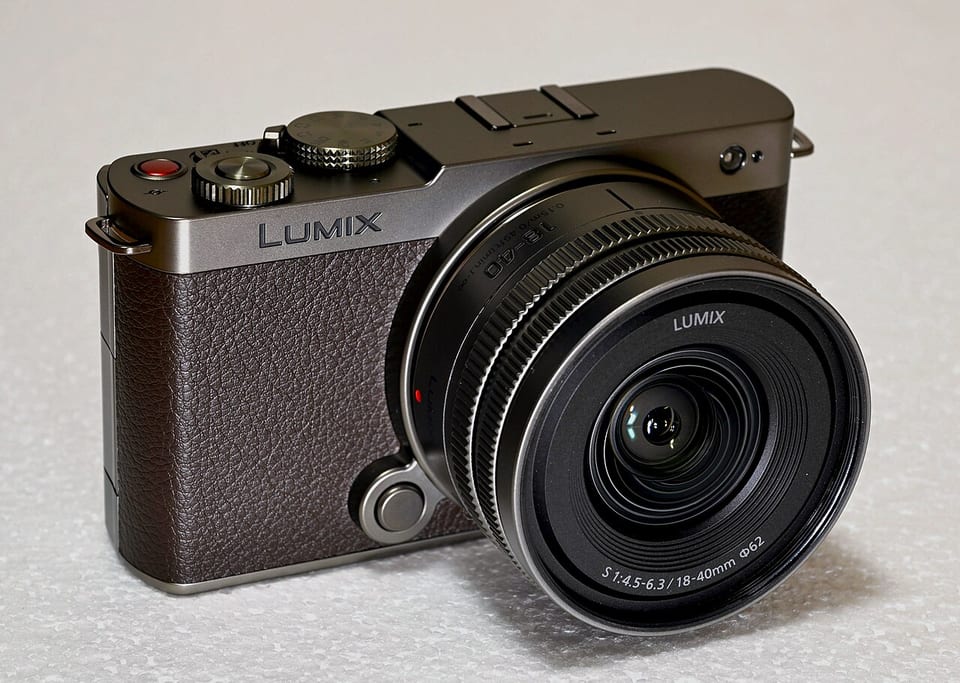
Panasonic Lumix DC-S9 In budget
Stabilized, finderless, cheap
A 24MP full frame with IBIS and phase-detect AF in a body with no finder, no mechanical shutter and no hot shoe. Panasonic built it for phone-style creators.
Sensor 24.2MP, made by Sony Semiconductor (Wikipedia).
Lens Autofocus, 40.9 mm long, 144 g, sealed. Announced April 2026; no used copies yet, so the price is new ($398 at B&H). The Lumix S 26mm f/8 is the thin alternative: about 23 mm shorter, fixed f/8.
ISO ISO range not captured. DPReview: noise reduction keeps 'all but the finest details' at moderately high ISO. Usable values are the guide's inference.
Autofocus 779-point phase detect with subject detection. DPReview lists poor AF tracking as a con.
Viewfinder None. DPReview: screen washes out outdoors.
Shutter No mechanical shutter, no flash support. Cold shoe has no contacts (Wikipedia). DPReview: 'mediocre rolling shutter'.
Stabilization 5 stops body, 6.5 with Dual IS lenses.
Sealing Not stated in sources read.
Battery USB-C charging.
Firmware Announced 2026-09-16 for release 2026-10-13 (PetaPixel). The previous update shipped 2026-06-16; its version number was not captured.
Verdict. The only small L-mount body with stabilization, but at about 87 mm with the Lumix 40mm it is the deepest of them; the 26mm f/8 gets it to about 64 mm. No finder, and DPReview warns photographers will find the controls thin.
Sep 20242 yrs oldLeica Q
Sergiy Galyonkin, CC BY-SA 2.0Front and side to scale; dashed is the Leica CL + 40mm. 130×80.3 mm, 97.6 mm deep as carried.
Leica Q3 43 Over budget
Q3 with a 43mm APO
The Q3 with a stabilized 43mm f/2 APO-Summicron instead of the 28mm. Closest Q to the CL's 40mm view.
Sensor60.3 MP BSI-CMOSLens43mm f/2Usable ISO6,400 clean / 12,500 maxViewfinderBuilt-in EVFAutofocusHybrid PDAFShutterLeaf, to 1/2000StabilizationLens OISScreen3" tilting, touchSealingIP52BatteryCIPA 350Size772 g · 97.6 mm deepReliabilityA
In the pocket
Photography Blog. Cameralabs measured 795 g with cap and hood. Coat pocket at best.
How to recognize it
Longer lens barrel with '43' and APO markings.
Reliability history
No known failure pattern. Current model, shares Q3 firmware.
Front and side to scale; dashed is the Leica CL + 40mm. 138×79 mm, 52.7 mm deep as carried.
Pixii Pixii Max (A3410) Over budget
The only digital body with 40 mm framelines
A French 24MP full-frame rangefinder with no rear screen and an electronic shutter. With your Summicron-C it is about 53 mm deep, the only full-frame camera here thinner than the CL. Its 33 mm body depth comes from a retail listing and needs confirming.
Sensor24.5 MP CMOSLens40mm f/2 (your Summicron-C)Usable ISO1,600 clean / 2,500 maxViewfinderRangefinderAutofocusManual, rangefinderShutterElectronic only, 2 s–1/32000StabilizationNoneScreenNone; top OLED + finder displaySealingNoneBatterySony NP-FW50Size605 g · 52.7 mm deepReliabilityC
In the pocket
About 29.7 mm of body behind the lens mount (measured from scaled top views, ±2 mm), plus 23 mm of lens. Jacket pocket, about the CL's depth. 138 mm wide, 18 mm wider than the CL.
How to recognize it
Slab-sided machined aluminum body, smaller than an M
Completely blank back: no screen, no buttons
OLED strip on the top plate beside the shutter dial
Model code A3410; A1112, A1571, A2572 or A2572+ are APS-C Pixiis, not the Max
Reliability history
Write errors. Frequent write errors with an audible error tone during normal shooting, per PetaPixel.
App dependence. Wi-Fi drops, Bluetooth drains the battery, and the app is the only way to review images.
Company risk. Production paused on a sensor shortage from late 2024 to Mar 2025. In Jun 2026 Pixii said its next camera is essentially complete and that it is seeking investors and partners to reach scale. Long-term service on a used body is an open question.
Used price
~$4,499 $4,499–$4,999 elsewhere
The lens is your own Summicron-C, so the body is the whole cost.
No used Pixii Max at any of the three retailers. New price observed September 7, 2026 for the M-mount guide.
Fallback: no used listings anywhere; B&H sells it new from $4,499. B&H new.
Sold new at $4,499.
Launch price $4,325.
Sensor BSI, Bayer, with a native monochrome raw mode (software, not a mono sensor). DxOMark scored it 93 with 13.6 stops of dynamic range.
Lens Your lens, so it adds nothing to the price. Compatible with every digital M and the Pixii Max: it brings up the 50 mm framelines on Leica rangefinders (the Pixii has a real 40 mm line), has no 6-bit code (set the lens type by hand), and users on the M9, M11-P and others report accurate focus wide open. Leica warned in 1973 that the pitched cam was only guaranteed on the CL, so check focus on the body you buy.
ISO PetaPixel found brutal shadow banding at anything above about 2500 in color, better in monochrome mode. The lab score and the field result disagree; trust the field.
Autofocus Rangefinder focusing, like the CL. The Summicron-C couples down to 0.8 m.
Viewfinder Optical rangefinder like the CL's. The only body here with a real 40 mm frameline, chosen in the lens menu. PetaPixel found the rangefinder patch dim.
Shutter No mechanical shutter at all. Silent, with a synthetic shutter sound in firmware. Rolling shutter and banding under artificial light are the cost. Flash sync not published.
Stabilization No stabilization; the Summicron-C has none either.
Sealing No sealing claim; the spec page lists a dual-block machined aluminum body and nothing about ingress.
Battery No CIPA figure; PetaPixel struggled to get a couple of hundred shots. The upside: NP-FW50 is the Sony a6000/a7 battery, cheap and everywhere.
Storage No card slot. Offload over Wi-Fi or USB-C. PetaPixel reported frequent write errors during normal shooting that cost frames.
Firmware The most actively updated camera here: 9.5.6 (Jun 2026) rebuilt metering and the app. A used body may be several versions behind; update before judging it.
Verdict. The closest thing to a digital CL on paper: CL depth, a real 40 mm frameline, and your lens. In practice it is new-only at $4,499, reviews report short battery life and card-write errors, and the company is looking for investors.
Apr 20251.4 yrs oldOther fixed-lens
昼落ち, CC0 1.0Front and side to scale; dashed is the Leica CL + 40mm. 133.5×90.4 mm, 76.5 mm deep as carried.
Fujifilm GFX100RF Over budget
Medium format reference
A 102MP medium-format sensor behind a 28mm-equivalent f/4 leaf-shutter lens, with an 820-shot battery and dual card slots. Announced March 20, 2025 at $4,899.95.
Sensor102 MP CMOSLens35mm f/4 (28 eq.)Usable ISO12,800 clean / 25,600 maxViewfinderBuilt-in EVFAutofocusPDAF, subject AIShutterLeaf, to 1/4000StabilizationNoneScreen3.15" tilting, touchSealingSplash resistantBatteryCIPA 820Size735 g · 76.5 mm deepReliabilityA
In the pocket
735 g with battery and card (Fujifilm). The square hood adds bulk (DPReview). Coat pocket at best.
How to recognize it
Aspect-ratio dial on the top plate, square lens hood.
Reliability history
No known failure pattern. Current model with active firmware.
Sensor 102MP GFX CMOS II HS, 44 x 33 mm medium format, about 1.7x the area of full frame. Not full frame.
Lens Digital teleconverter to 45/63/80mm (36/50/63mm equiv.), aspect-ratio dial including 3:4 and 17:6. Built-in 4-stop ND.
ISO ISO range not captured. DPReview: high-ISO noise 'follows sensor-size expectations'. Usable values are the guide's inference.
Autofocus Phase detect with subject recognition. DPReview: 'generally reliable' for street and portraits; tracking sometimes loses fast subjects.
Viewfinder Built-in OLED EVF, 5.76M dots, 0.84x.
Shutter Leaf shutter, near silent, syncs at all mechanical speeds.
Stabilization No IBIS or OIS; DPReview flags this for low light.
Sealing Dust and drip resistant only with the included adapter ring and a PRF-49 filter.
Battery Best in this list. USB-C.
Firmware Fuji Addict. A 1.13 update (2026-06-30) is for the Fragment Edition only.
Verdict. Over budget and not full frame. Its 77 mm depth is close to the RX1R III, but at 735 g it is a much heavier camera.
Apr 20251.4 yrs oldInterchangeable
昼落ち, CC0 1.0Front and side to scale; dashed is the Leica CL + 40mm. 130.1×72.8 mm, 74.1 mm deep as carried.
Sigma BF In budget
The minimalist successor to the fp
A 24.6MP full frame cut from one aluminum block, with three buttons, a dial, phase-detect AF and 230 GB of internal storage. No finder, no mechanical shutter, no card slot.
About 33.2 mm of body behind the lens mount (measured from scaled top views, ±2 mm), plus 40.9 mm of lens. Jacket pocket, RX1-class depth.
How to recognize it
Seamless aluminum unibody, black or silver.
Reliability history
Firmware 1.02 was pulled. Sigma halted 1.02 on 2025-11-05 and replaced it with 1.03 on 2025-11-11 for an undisclosed issue. Make sure a used body is on 1.03 or later.
Internal storage. No card to swap if the storage fails; unknown long-term. Not a reported problem.
Used price
$1,790 typical · $1,757–$1,827
Plus ~$398 for the Lumix S 40mm f/2: about $2,188 ready to shoot.
Only KEH had one. Not checked at Adorama (blocked).
Sensor 24.6MP BSI; base ISO 320 for stills (Sigma).
Lens Autofocus, 40.9 mm long, 144 g, sealed. Announced April 2026; no used copies yet, so the price is new ($398 at B&H). The Lumix S 26mm f/8 is the thin alternative: about 23 mm shorter, fixed f/8.
ISO Range 100-102400, expandable to 6. DPReview: Auto ISO favors 400 for its HDR, which adds shadow noise. Usable values are the guide's inference.
Autofocus Hybrid phase detect with human and animal tracking. DPReview: 'very simple' but effective; PetaPixel: tracking 'impressively tenacious'.
Viewfinder None. DPReview lists no finder as a con in bright light.
Shutter No mechanical shutter. 24.8 ms readout (about 1/40); DPReview warns of rolling shutter and banding. PetaPixel: effectively no flash.
Stabilization Electronic stabilization for video only.
Sealing Sigma: dust and splash resistant structure, for light rain.
Battery DPReview suggests a power bank for heavy days.
Firmware Sigma firmware page.
Verdict. The most CL-like object in spirit: small, simple, slightly stubborn. It is the thinnest body at the mount, so with the Lumix 40mm f/2 it is about 74 mm deep, within 2 mm of an RX1R II. No finder.
Front and side to scale; dashed is the Leica CL + 40mm. 113.3×67.9 mm, 74.5 mm deep as carried.
Sony DSC-RX1R III Over budget
Current RX1, over budget
The RX1 body rebuilt around the 60MP a7CR sensor, modern AF, a fixed EVF, and a bigger USB-C battery. It keeps the Zeiss 35mm f/2 and the leaf shutter.
Sensor60.2 MP BSI-CMOSLens35mm f/2Usable ISO6,400 clean / 12,800 maxViewfinderBuilt-in EVFAutofocusPDAF, subject AIShutterLeaf, 1/2000 at f/2StabilizationNoneScreen3" fixed, touchSealingSplash resistantBatteryCIPA 300Size498 g · 74.5 mm deepReliabilityA
In the pocket
Lens tip to monitor is 74.5 mm (Sony via CineD); the fixed eyecup brings the bounding box to 87.5 mm. Jacket pocket, but the eyecup makes it the thickest RX1.
How to recognize it
Built-in EVF in the top-left corner with a fixed eyecup; no pop-up.
Reliability history
No known failure pattern. Current model with Sony support. One DPReview thread about a dead battery on arrival; nothing systemic found.
Used price
$4,393 typical · $4,282–$5,098
Barely a year old, so used copies are near-new and priced accordingly. Not checked at Adorama (blocked).
Sensor Same 60MP sensor as the a7R V, a7CR and Leica Q3 (DPReview). AA filter status not confirmed in sources read.
Lens DPReview: 'a touch soft at wide apertures' at 60MP, full resolution when stopped down. Crops are 29MP and 15MP; Raw keeps the full frame.
ISO Native 100-32000, expandable to about 50-102400. DPReview: noise is 'comparable' to its predecessors. Usable values are the guide's reading of that plus the shared a7CR sensor.
Autofocus 693-point phase detect with AI subject recognition. Bionz XR plus AI processing unit. DPReview says Sony 'addressed the focus and battery life concerns' of the Mark II.
Viewfinder Fixed built-in OLED EVF, 2.36M dots, 0.7x. No longer a pop-up. Reviewers call the resolution low for the price.
Shutter Leaf shutter, near silent. DPReview spec page lists sync to 1/4000; that is only reachable stopped down.
Stabilization None.
Sealing Sony claims dust and moisture resistance, not waterproofing (Alpha Shooters). No IP rating.
Battery 300 shots on the LCD, 270 with the EVF. The 7.3 Wh battery has about 60 percent more capacity than the old NP-BX1. USB-C with Power Delivery charging. DPReview: 'still not great'.
Firmware Per Sony regional support listings in search results. No update found as of 2026-09.
Verdict. The most capable pocket full frame, but new it is $5,099, so it will not reach $3k used soon. It shows what the RX1R II lacks: AF, battery and weather resistance.
About 36 mm of body behind the lens mount (measured from scaled top views, ±2 mm), plus 23 mm of lens. Jacket pocket, about the CL's depth. 147 mm wide, 18 mm wider than the CL.
How to recognize it
No rangefinder, illumination or frame-line windows on the front
EVF eyepiece in the finder hump
No ISO dial on the left shoulder
147 mm wide; the preview lever is now an electronic control
Reliability history
Under a year old. No hardware failure mode reported, which is weak evidence at this age. Users report EVF and LCD banding under flickering LED light with the electronic shutter (turn exposure preview off), and the removed left-hand ISO dial draws complaints.
Used price
$8,600 typical · $8,367–$8,884
The lens is your own Summicron-C, so the body is the whole cost.
KEH only. Five used bodies within a year of launch says something about how it was received. Observed September 7, 2026 for the M-mount guide.
Sensor BSI, triple resolution, no low-pass filter. Same generation as the M11.
Lens Your lens, so it adds nothing to the price. Compatible with every digital M and the Pixii Max: it brings up the 50 mm framelines on Leica rangefinders (the Pixii has a real 40 mm line), has no 6-bit code (set the lens type by hand), and users on the M9, M11-P and others report accurate focus wide open. Leica warned in 1973 that the pitched cam was only guaranteed on the CL, so check focus on the body you buy.
ISO Nobody has tested it apart from the M11; DPReview defers to the M11 numbers. Treat the M11 ceilings as the working assumption.
Autofocus Manual focus by magnification and peaking in the EVF. The Summicron-C's cam and framelines stop mattering.
Viewfinder An M11 with a 5.76M-dot EVF instead of the rangefinder. Focuses to the lens's minimum.
Shutter M11 mechanical and electronic shutter. 3 or 4.5 fps. No published noise characterization.
Stabilization No stabilization; the Summicron-C has none either.
Sealing No IP rating, no formal claim; the M11 language applies.
Battery CIPA about 244 (LCD) or 237 (EVF), far below the M11 because there is no optical finder to fall back on. Carry two.
Storage No storage-specific reports.
Firmware Shares the M11 firmware line.
Verdict. Far over budget, but it removes every compatibility question about the Summicron-C. Listed so the M-family picture is complete.
Sensor Monochrome 60MP, no color filter array. Triple resolution 60/36/18MP (DPReview).
Lens Crop modes not confirmed in sources read; likely same as Q3.
ISO Too new for a reviewer consensus on noise. Leica rates it to ISO 200,000; these figures are the guide's estimate from the color Q3 plus the usual one-stop monochrome advantage, not a quote.
Autofocus Contrast-detect only. DPReview: unlike the color Q3 it 'does not gain phase-detection AF'. 4 fps with AF, 15 fps with AF locked.
Viewfinder Built-in OLED EVF, 5.76M dots. Imaging Resource: same 5.67MP-class OLED finder as the Q3.
Shutter Leaf shutter, near silent.
Stabilization Optical stabilization in the lens (inherited from Q3; not separately confirmed).
Sealing DPReview.
Battery USB-C charging.
Firmware Leica Rumors.
Verdict. Far over budget and as bulky as any Q. Included only because it exists.
If you want…
the closest thing to a digital CL, in budget, full frame → Sony Cyber-shot DSC-RX1R II, Sony Alpha 7C II (ILCE-7CM2) — the RX1R II is 72 mm deep with a pop-up finder for about $2,275; the a7C II with the Septon is 74 mm with a better finder, IBIS and battery for about $2,770.
the CL's depth, keeping full frame, if the budget can stretch → Leica M (Typ 240), Leica M9 — your own Summicron-C on a rangefinder, 58 to 63 mm deep. The M240 runs about $3,400; the M9 is cheaper but needs a documented sensor replacement.
the CL's depth, and a smaller sensor is acceptable → Fujifilm X100VI, Fujifilm X100V — the only sub-full-frame cameras that give up nothing else: 53 to 55 mm, f/2, optical finder, leaf shutter. Under $2,100 either way, if you can find one.
the smallest full-frame camera, for the least money → Sony Cyber-shot DSC-RX1R, Sony Cyber-shot DSC-RX1 — about $950 for the RX1R II's lens and pocket size, without the finder, fast autofocus or battery life.
a finder, IBIS and all-day battery for under $2,000 → Sony Alpha 7C (ILCE-7C), Nikon Z5 — about $1,800 and $1,470 with the Septon, at 73 and 78 mm. Manual focus with that lens.
Leica handling and the Summilux under $3,000, pocket or not → Leica Q (Typ 116) — KEH had eight between $2,212 and $3,040. Check what Leica will still service before you buy.
something nobody else has → Pixii Pixii Max (A3410) — the only digital body with a 40 mm frameline and thinner than the CL with your lens on it, at $4,499 new and with rough edges.
no compromises, and the budget can bend a lot → Sony DSC-RX1R III, Leica Q3 — current bodies with modern autofocus and finders; used copies sell for $4,400 and $6,200.
Close, but not in the running
Leica M11 family(2022, full frame, 60MP) — About 60 mm with your Summicron-C, but $7,500 and up used. See the M-mount guide.
Fujifilm X-E4 with XF 27mm f/2.8(2021, APS-C, 26MP) — About 56 mm and 448 g, and a 41mm-equivalent view, but f/2.8 on APS-C is about 2.2 stops short of the Summicron-C at f/2, with no stabilization and no sealing. Around $1,000 used for the body at KEH.
Fujifilm X-E5 with XF 23mm or 27mm f/2.8(2025, APS-C, 40MP) — 56 to 62 mm with IBIS and a finder, but the same f/2.8 problem; the XF 23mm f/2 takes it to 85 mm. About $1,600 used at KEH. Fujifilm has a free repair for loosening strap lugs.
Ricoh GR IIIx and the coming GR IVx(2021 / 2026, APS-C, 24–26MP) — About 35 mm deep with a 40mm-equivalent lens: truly pocketable. No finder, f/2.8, no sealing, and dust on the sensor is a known problem. GR IIIx production ends in October 2026; the GR IVx was announced as in development in August.
Leica CL (digital, 2017)(2017, APS-C, 24MP) — The name, not the camera: about 66 mm with the 18mm f/2.8 pancake, no stabilization, and no leaf shutter. $1,871 to $2,043 at KEH.
Sony RX100 VII and Fujifilm X half(2019 / 2025, 1-inch) — Pocketable, but about 3 stops behind the RX1R II. Below the line for this guide.
Nikon Z5IIc(2026, full frame, 24.5MP) — About 79 mm with the Septon and no viewfinder. The Z5 does the same job with a finder for less.
Method and sources
Specs come from manufacturer pages and manuals, cross-checked against DPReview, PetaPixel, Imaging Resource and other reviews listed below. "Usable ISO" and the reliability grade are the guide's judgments, built on the reviewer statements cited in each camera's notes. Depth as carried is the body depth plus the lens as it sits in a pocket: retracted, capped, or for fixed-lens cameras the full length to the front of the lens.
Used prices were read from B&H Used, KEH and Adorama Used on September 25, 2026. The range spans condition grades; the typical number is a mid-grade copy. For interchangeable bodies the "ready to shoot" price adds a used pancake lens. Adorama began refusing the automated browser partway through the sweep, so several models were checked only at B&H and KEH; the notes say which. Prices are point-in-time observations, not live listings.
Depth for interchangeable bodies is measured from the lens mount, not from the front of the grip: the body behind the mount (estimated from scaled top-view drawings on camerasize.com, checked against the makers' own figures, about ±2 mm) plus the lens's length from the mount. Lens pairings are Drew's: the Voigtländer Septon 40mm f/2 on Sony E and Nikon Z, the Lumix S 40mm f/2 on L-mount, and his own Summicron-C on Leica M. Eyecups that stick out further are noted per camera, not counted.
The APS-C cameras had to pass a checklist of core items (35 to 45 mm equivalent, f/2, a built-in finder, stabilization, 24MP or more, 60 mm or less as carried) with nothing failing outright. Of about twenty candidates, only the X100VI passes; the X100V fails only on stabilization. The rest are in the near misses.
Leica M prices were observed on September 7, 2026 for the M-mount guide rather than re-read; everything else on September 25.